How to create product images for Amazon yoga mats? A guide to showcasing thickness, texture, and storage conditions.
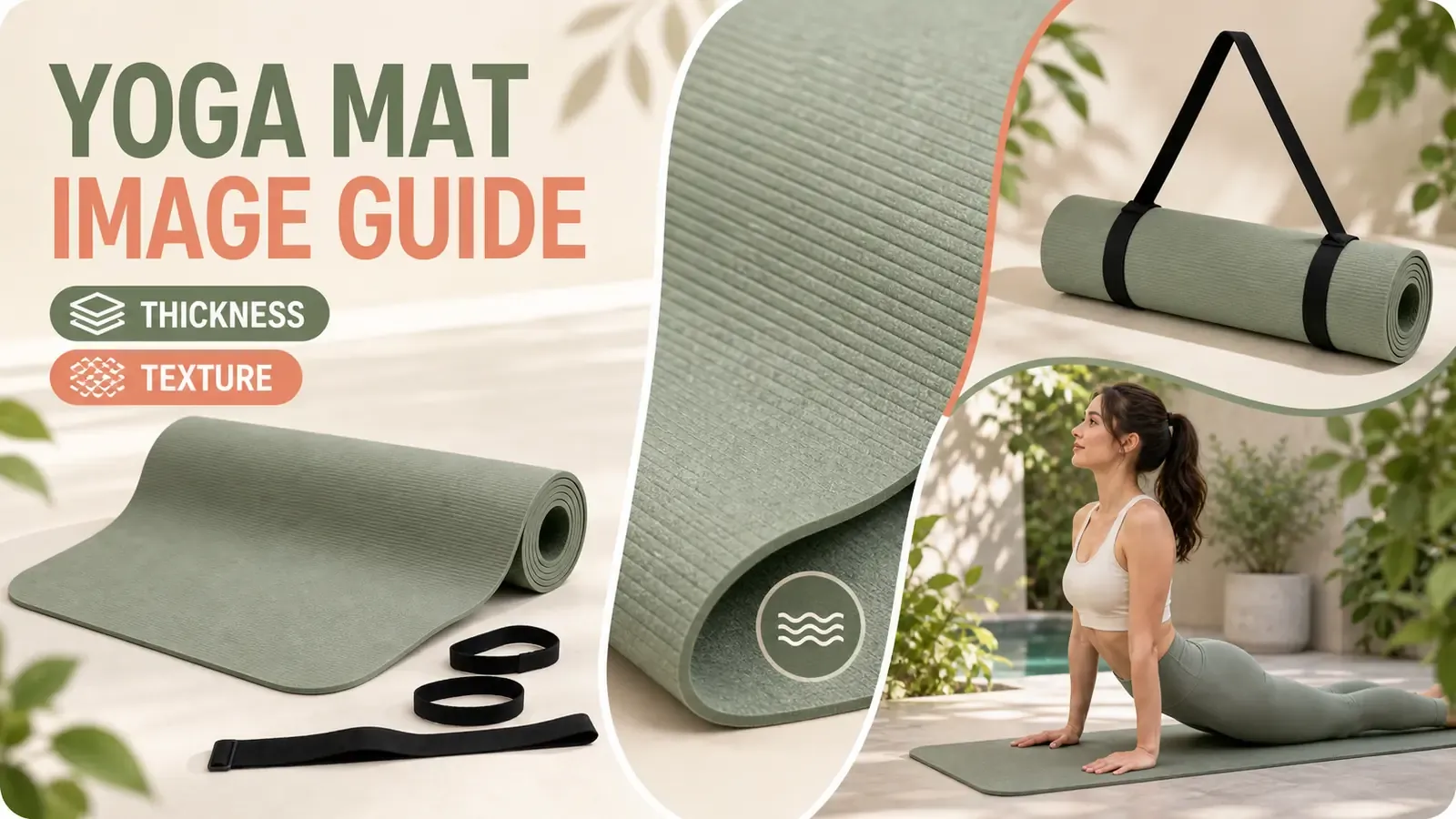
Have you ever encountered this: after completing all the A+ content and main images for a yoga mat on Amazon, your listing gets rejected upon submission? Or perhaps your listing’s image click-through rate is good, yet the return rate remains stubbornly high?
Many people blame product selection or customer reviews, but they overlook one crucial point: the entire product image library lacks internal consistency. Details such as thickness, rolled-up diameter, anti-slip textures on both sides, and included accessories contradict each other across images, leading buyers to form incorrect expectations about the product.
While atmospheric scene images are certainly important, their primary purpose is to accurately represent the product itself. The following practical guide focuses specifically on yoga mats, clearly explaining the boundaries of how to showcase thickness, texture, and storage states, and distinguishing between visual issues that can be corrected and those that must be completely redone.
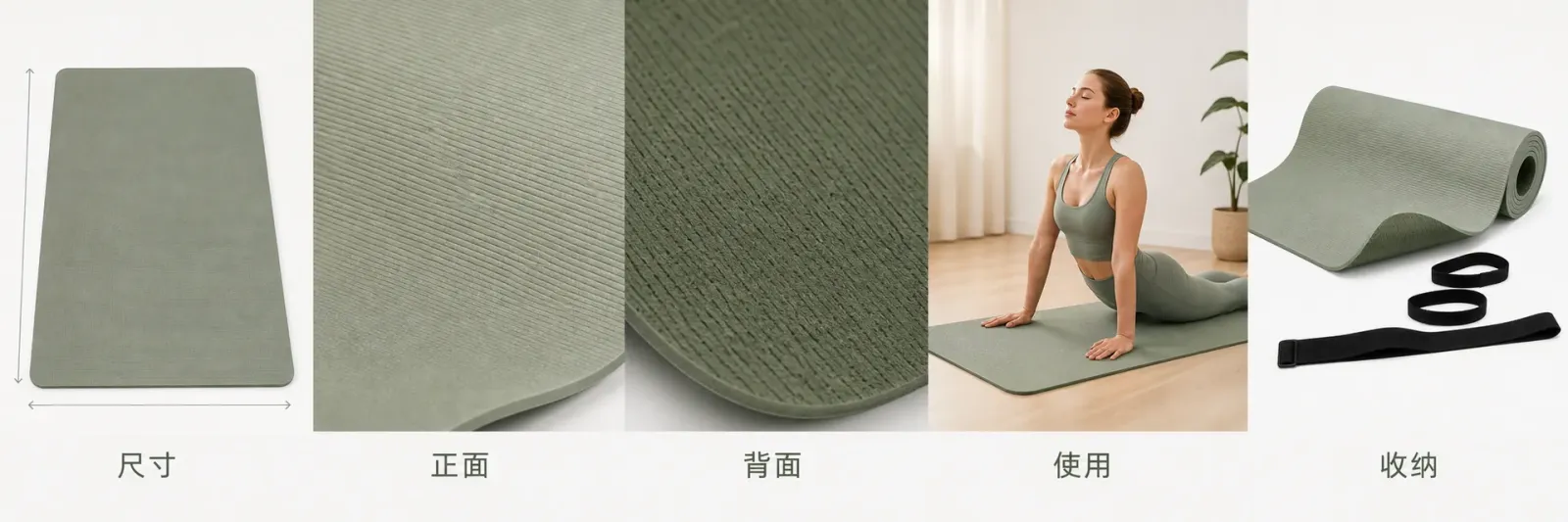
Thickness, texture, edges, rolled-up diameter, and accompanying accessories should all align consistently within the same image library.
I. First, remove three categories of yoga mat images that cannot be further refined.
Visual Issues | Why Local Editing Isn’t Allowed | How to Handle It |
|---|---|---|
Inconsistent Thickness Between Unfolded and Rolled Images | The Product’s Overall Dimensions Have Changed | Return to Side References for Redoing |
Both Front and Back Use the Same Texture | The Double-Sided Structure Has Been Blurred | Enter Separate Front and Back References |
Changes in Strap Quantity or Buckle Shape | Changes in Included Items and Usage Instructions | Redo According to the Packing List |
Background clutter, slight floor reflections, or minor edge blemishes can be retouched later; however, if the thickness, texture, or accessories are incorrect, stop editing immediately—cut your losses first.
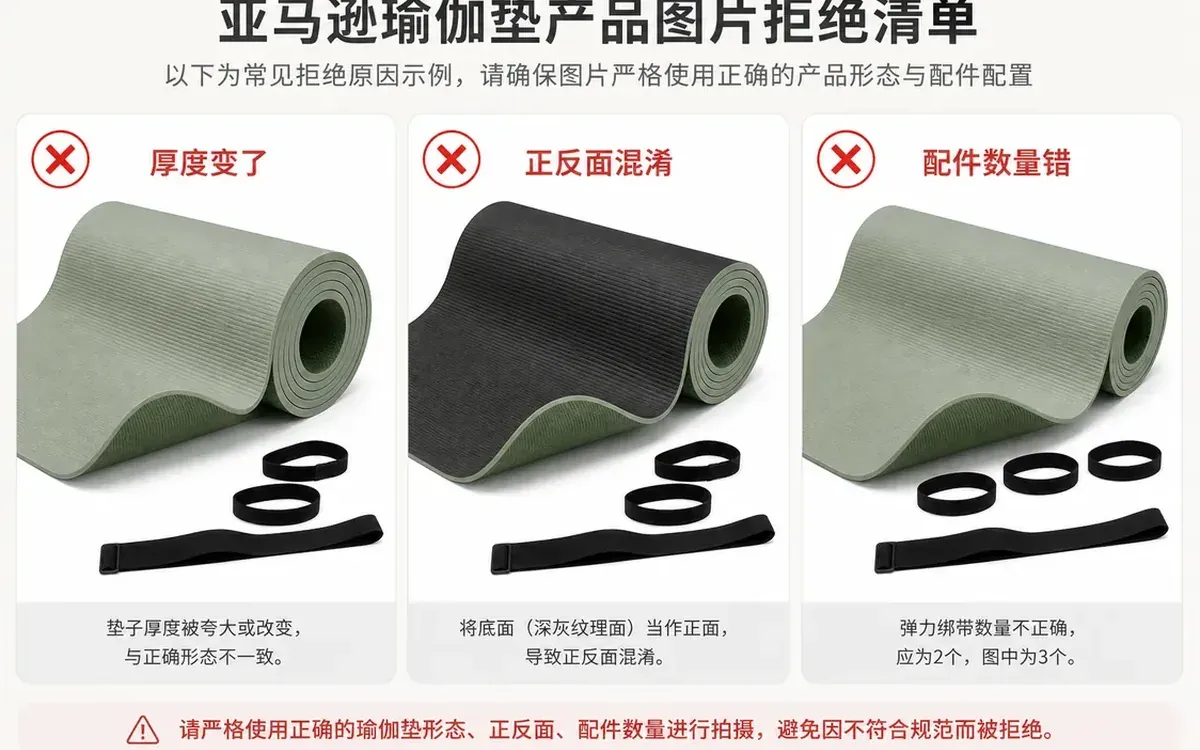
When deciding whether to redo an image, first assess whether the error fundamentally alters the product itself.
II. Yoga Mat Thickness Images Must Show Both the Side Edge and Measurement Start/End Points
Simply labeling “Thickened” on the image isn’t enough. Thickness images must capture the flat side edge and clearly mark where the measurement begins and ends; numbers should only reflect the approved specifications for the current SKU. Carpets, soft pads, or sunken grass will exaggerate perceived thickness and are therefore unsuitable as the sole reference.
Human proportions in scene images also cannot substitute for actual dimensions. Length, width, and thickness should be presented separately in specification diagrams, while model poses merely help buyers understand the spatial relationship between the body and the mat surface.
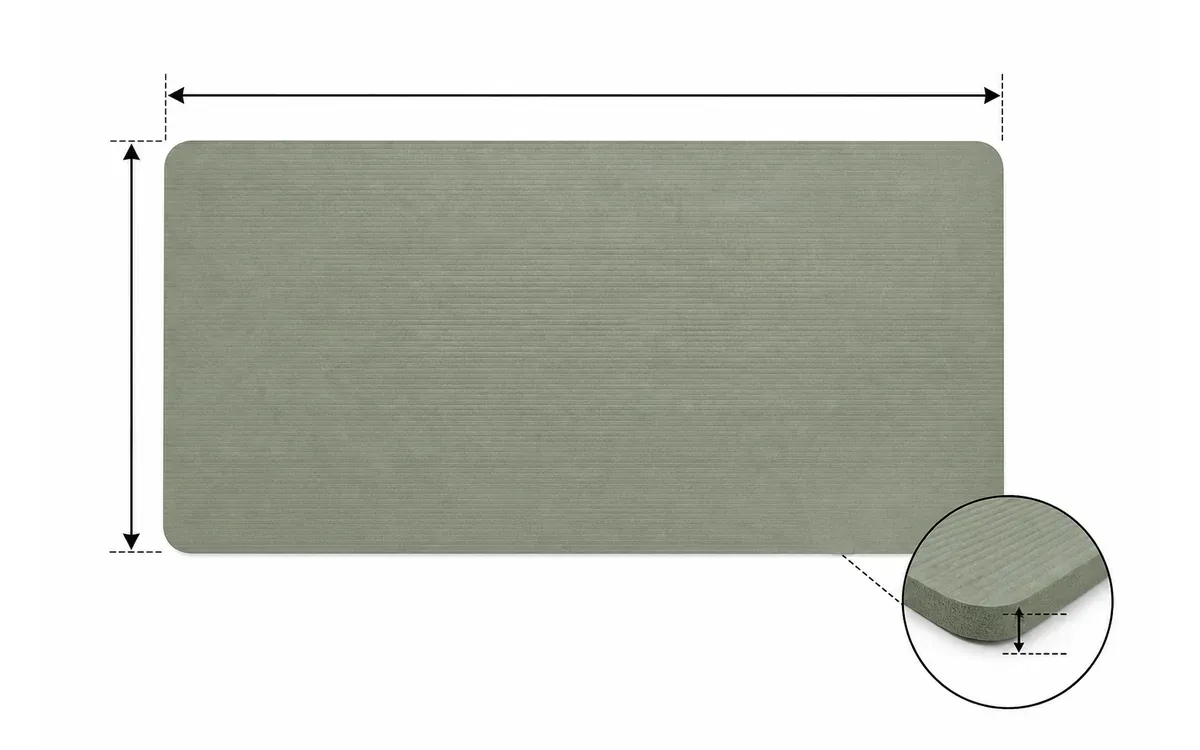
Dimension arrows must land precisely on real edges, and numerical values should use brand‑approved data.
III. Body‑Contact Surface Texture and Backside Ground Texture Should Be Photographed Separately
Double‑sided yoga mats often feature different textures on the side that contacts the body versus the side that touches the ground. Your image library should include at least one close‑up of the front side, one close‑up of the back side, plus a side‑view cross‑section, so buyers know exactly which layer they’re looking at.
If your existing materials consist of only one unfolded image, you can supplement it with close‑ups of both the front and back sides, along with detailed texture shots and a storage‑case illustration. When generating these images, upload separate references for the front, back, and side views; after output, carefully check the texture direction, density, rounded corners, and color.
Once thickness, front/back textures, motion, and storage information have all been approved, you can use the A+ detail page tool to organize specifications, structure, and usage illustrations into modular sections. These modules are solely intended to present confirmed information and do not fill in missing performance data.
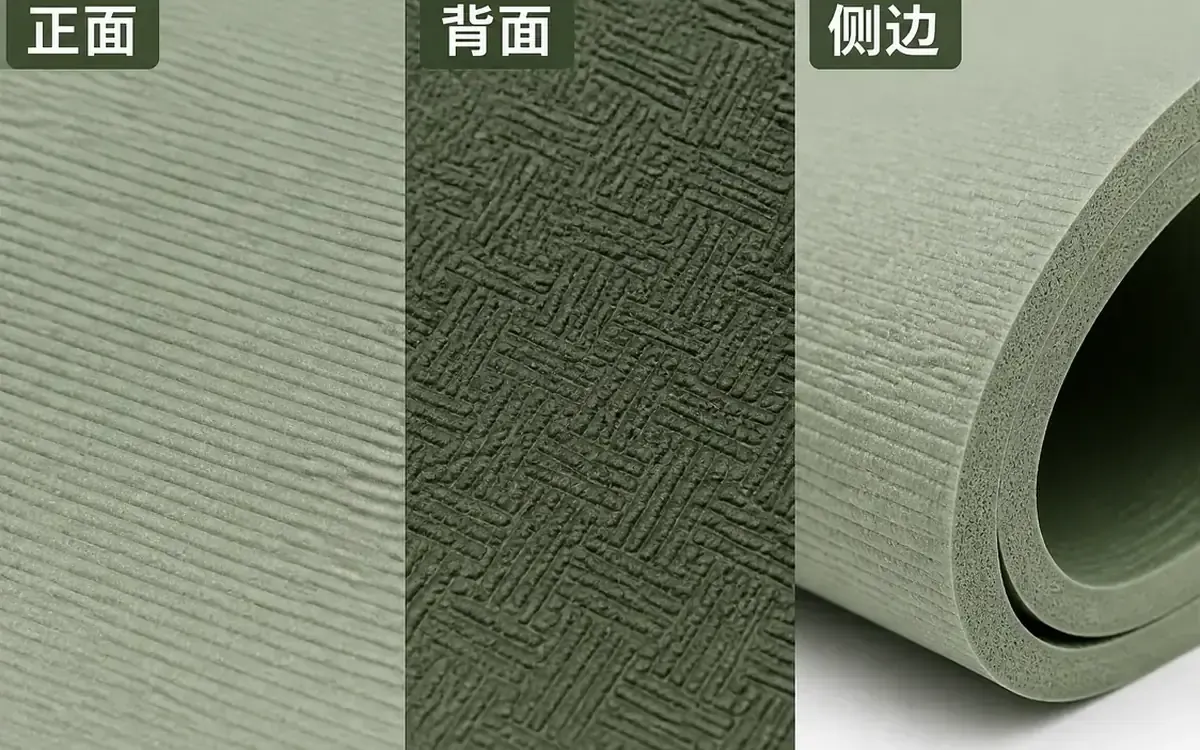
For each close-up shot, first clearly indicate which side is being photographed, then discuss the visible texture.
4. Action images only demonstrate the visible surface area; they do not prove anti-slip or support performance.
Downward-facing dog, plank, or stretching poses can show the mat’s coverage area, hand and foot placement, and whether the edges are curled up. The model’s palms and soles should make genuine contact with the mat—no parts should be floating in the air, nor should the yoga mat automatically expand or lengthen as the pose changes.
When supplementing action scenes, you may use the same yoga mat and an adult model to create different pose illustrations. Images alone cannot verify anti-slip ratings, rebound speed, weight capacity, or joint protection; such information must be supported by corresponding test results or brand documentation.
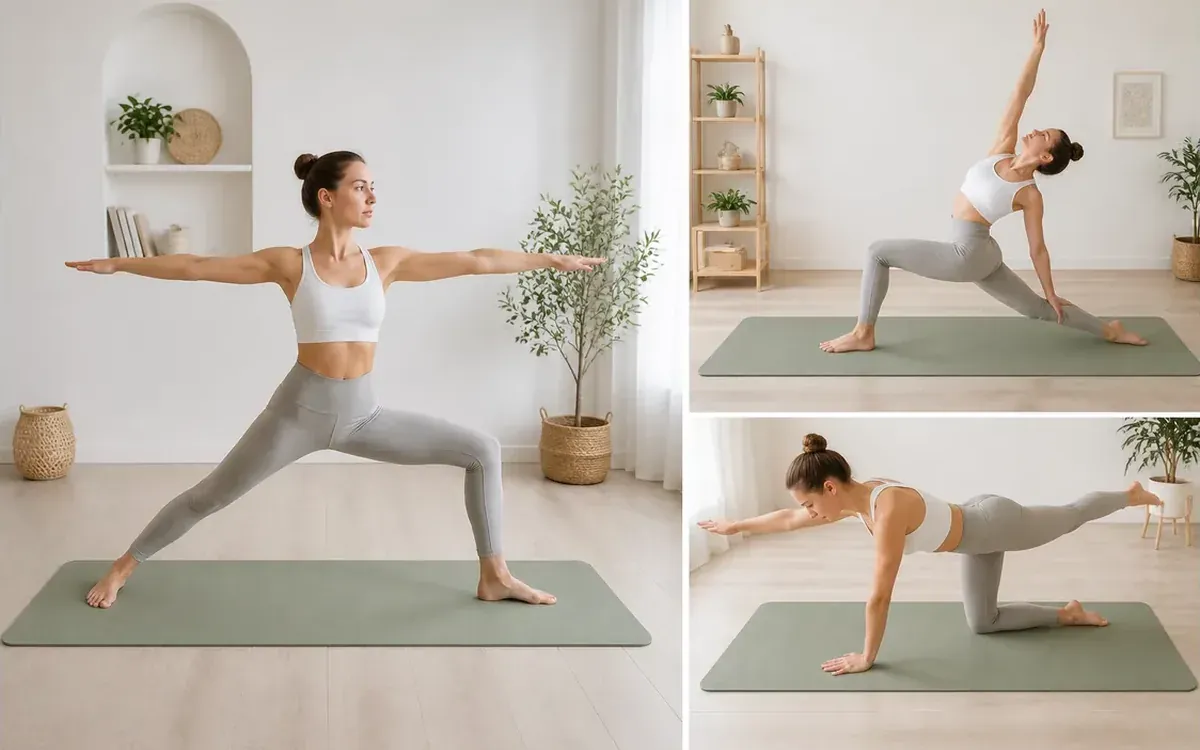
Action images show how the body occupies the mat surface but do not replace formal performance testing.
5. Images of the rolled-up state and straps must be included in the accompanying product materials.
Roll-up photos need to be interpreted alongside the unfolded thickness measurements. Rolling too tightly will make the diameter appear unrealistically small, while rolling too loosely will exaggerate the storage volume. If straps, ties, or storage bags are included with the product, display their quantity, fasteners, and installation method; if used solely as props for photography, they should not appear in packaging images.
If the product structure is correct and there are only minor marks from floor contact, dust on the edges, or slight color variations, you may select and refine specific areas around the mat’s edges and background . Do not alter real creases into a different texture, nor modify strap fasteners into new designs.
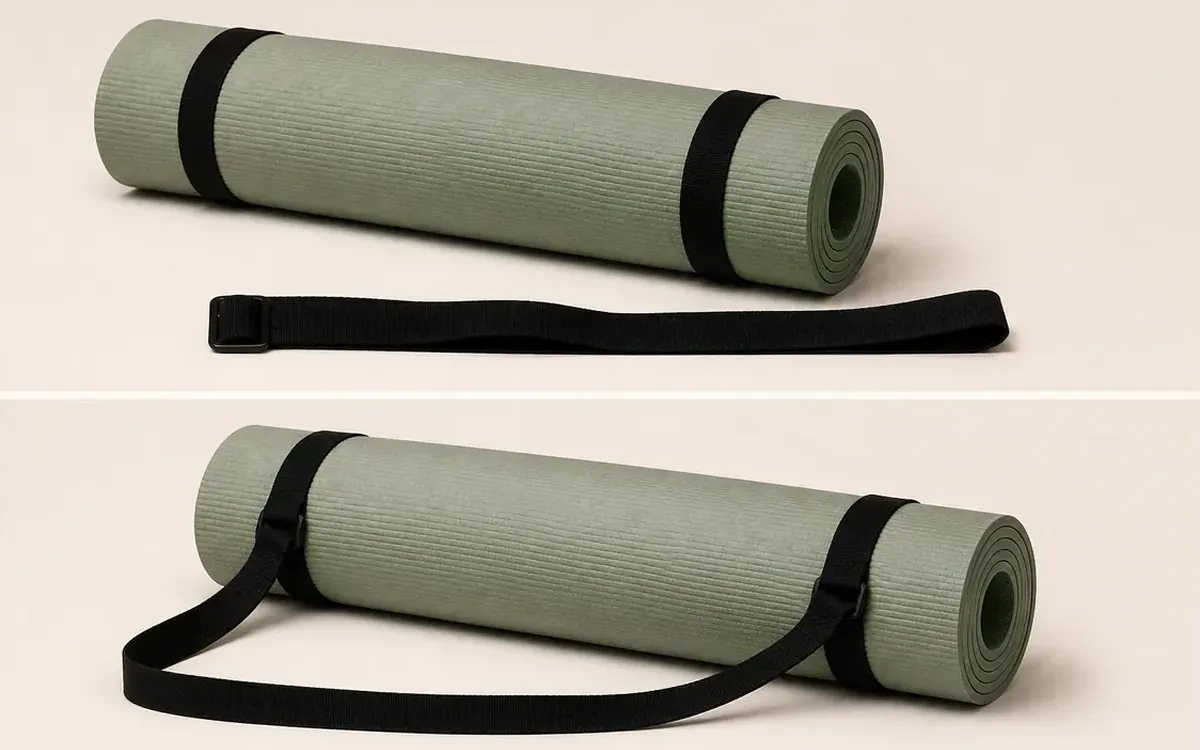
For storage images, first count all included accessories, then verify the rolled-up diameter and the position of any fasteners.
6. Common issues with Amazon yoga mat product images
1. Can the same yoga mat model with different thicknesses share the same action images?
While poses and camera angles can be reused, the finished mat itself cannot simply have its color swapped. Side thickness and rolled-up diameter must match the current specifications; the sole‑to‑mat contact area must neither float nor be exaggeratedly indented, nor should the degree of indentation imply softness, firmness, or support performance.
2. After packaging, yoga mats often develop curled edges—should these be retained in product images?
The white‑background main image should depict the product in its fully unrolled state. If short‑term curling is a genuine part of the unpacking process, you may illustrate how to restore it in explanatory images—but do not present severe edge curling as the standard condition of use.
3. When towels or yoga blocks are included as free gifts, should they also appear in the main image?
If towels or yoga blocks are part of the current sales bundle, the main image should fully showcase the complete set, with quantities matching both the title and the packaging list. If they are optional add‑ons or photography props, they should not be included in the main image.

AI Image Tool Built for E-commerce Teams
For new product launches, advertising, and promotional campaigns, use AI to generate product images, scene visuals, ad creatives, and short video assets — making content production faster.