How to list a ceramic dinnerware set on Etsy? A guide to product images, including quantity, glaze color, and size ratios.
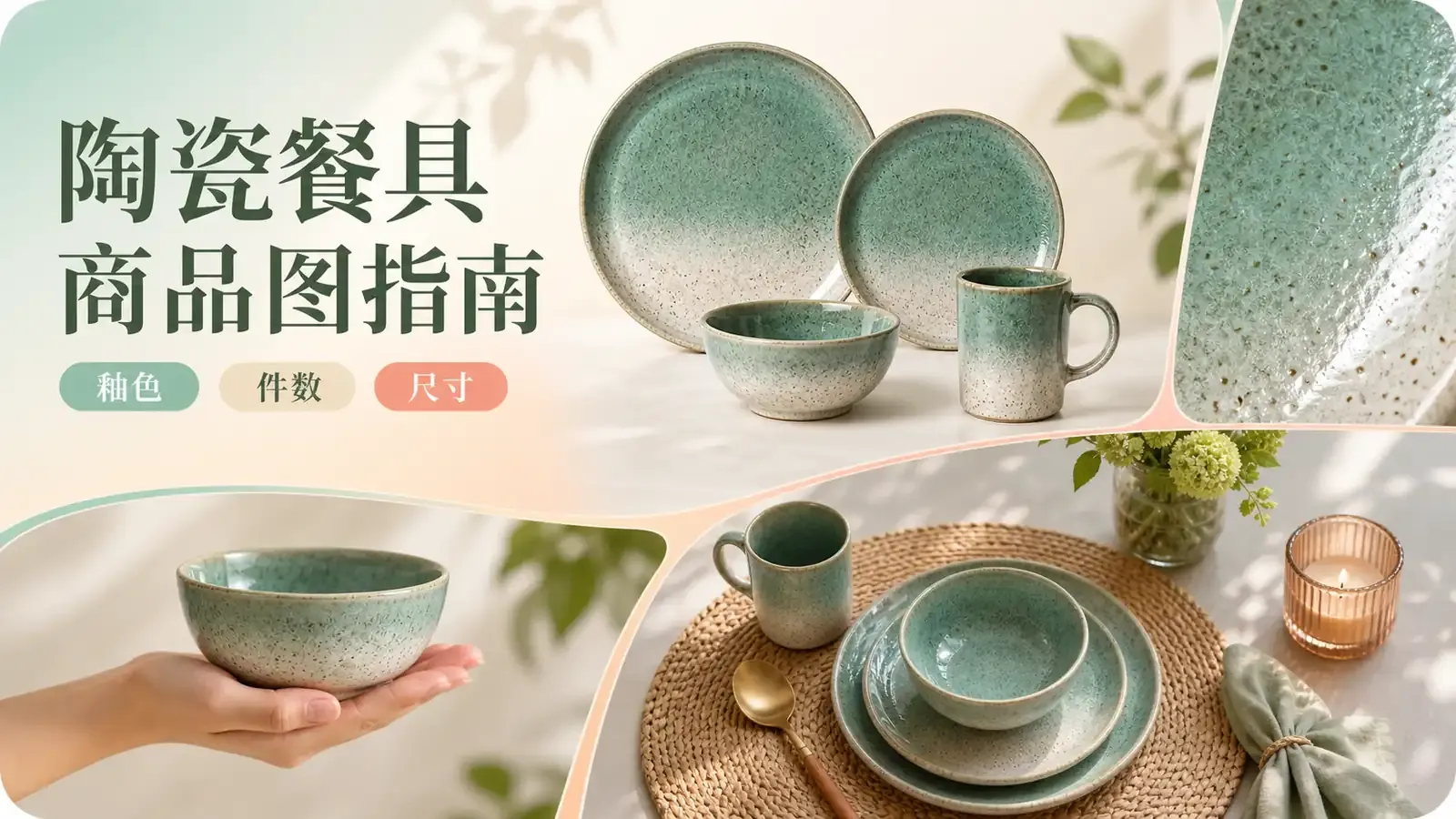
When selling handmade ceramics on Etsy, have you ever encountered this frustrating situation? Even though the marks are perfectly normal signs of handcrafting, buyers still file complaints upon receiving the item, claiming it has defects. Often, the root cause isn’t product quality—it’s overly retouched product photos that hide the true characteristics of handmade pieces.
Handmade glaze runs and slight deformations around the rim can be left as they are, but cracks or chips must never be concealed through photo editing. How do you distinguish between natural variations from handcrafting and actual product defects? What pitfalls should you avoid when taking group set photos, size charts, table setting scenes, or real‑life packaging shots? This practical guide explains everything clearly.
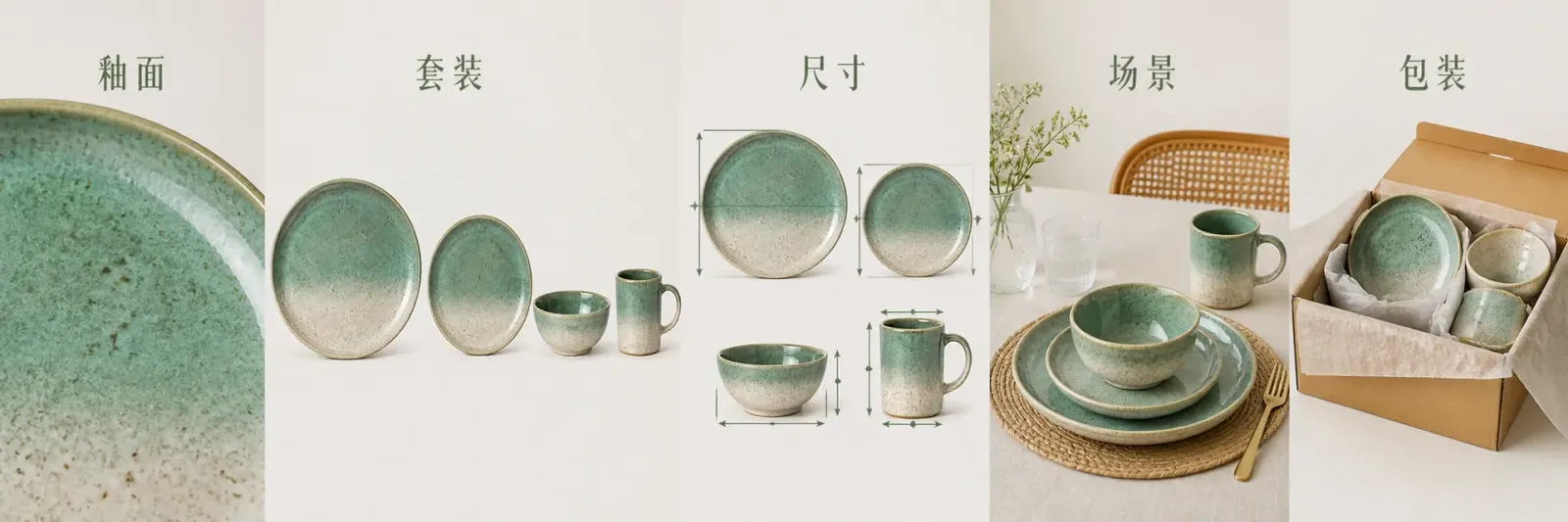
First, differentiate between handcrafted nuances and structural issues, then create set images, proportion diagrams, and scene shots.
I. Distinguish between handcrafted glaze variations and product defects by first assessing visible symptoms.
Glaze depth, glaze flow boundaries, tiny color specks, and hand‑drawn brushstrokes may vary slightly due to the handmade nature of the piece; however, cracks, chips, sharp burrs, loose handles, or distortions that affect stability should not simply be labeled as “each piece is unique.” Specific acceptance criteria should be determined by your brand and product quality control, while photos should only accurately capture the visible condition.
Visual Symptoms | What to check first | Image processing |
|---|---|---|
Same glaze shade, different depths | Whether within the approved sample range | Uniform lighting and side-by-side display of representative differences |
Slight rim undulation | Does it affect usability or overall appearance | Retain close-up side views—do not directly round off edges |
Cracks, chips, or sharp points | Has quality control already deemed it unsellable | Address the product first—no need to mask defects with photo edits |
Dust, fingerprints, background clutter | Is the product structure entirely correct | Localized cleaning allowed |
Once the structure is confirmed correct, you canselect areas like glaze reflections, fingerprints, and background blemishes for targeted touch‑ups. If the rim shape, glaze flow boundaries, or authentic hand‑drawn brushstrokes are altered, revert back to the original image.
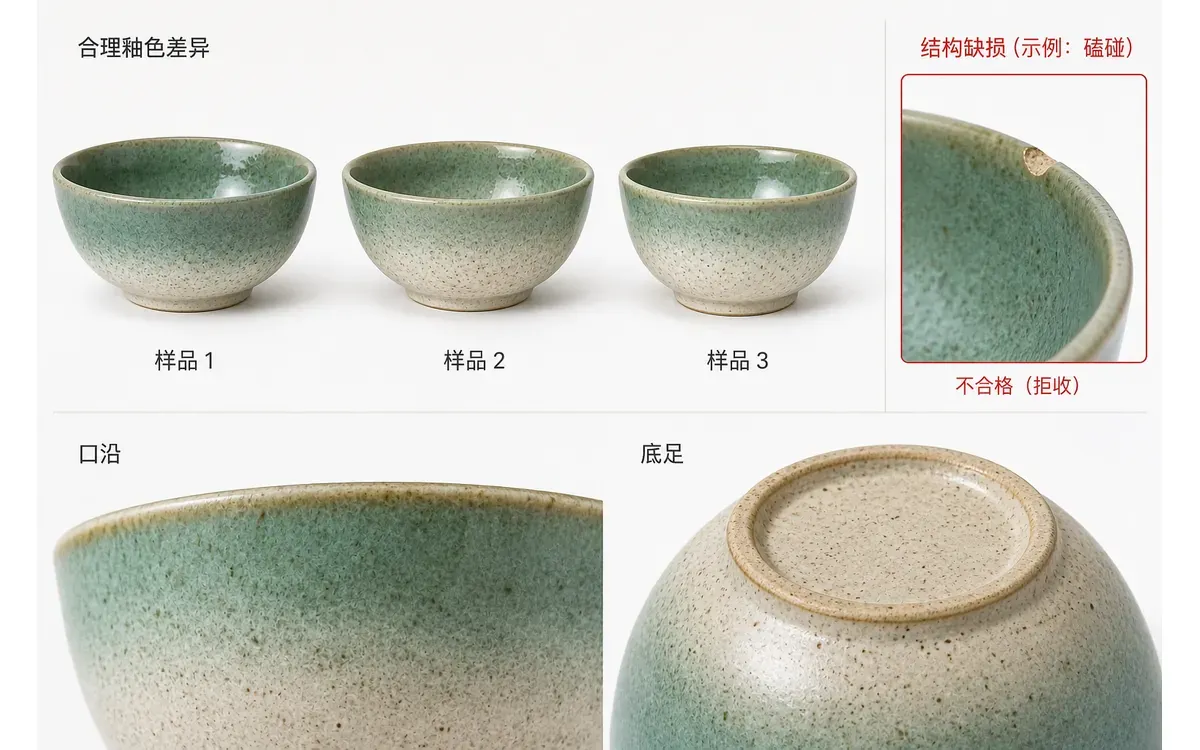
Natural variations should be faithfully presented, while structural flaws must not be hidden through soft lighting or excessive retouching.
II. After passing inspection, verify whether Etsy’s set dimensions are clearly stated.
For example, if a current four-piece set includes one dinner plate, one small plate, one bowl, and one mug, each item should appear once in the set photo. Food, tablecloths, forks, spoons, and vases are props and should not be included in the white‑background product photos. Different combinations of items require their own separate photos—don’t just adjust the quantity in the listing text.
Etsy product listings can use multiple photos to explain the item. When materials are scattered, you cansupplement set photos, single‑item angles, and scene shots according to the actual number of pieces, input reference images of each vessel’s front, side, and rim, then carefully check the shape, handle, and base of every piece after generation.
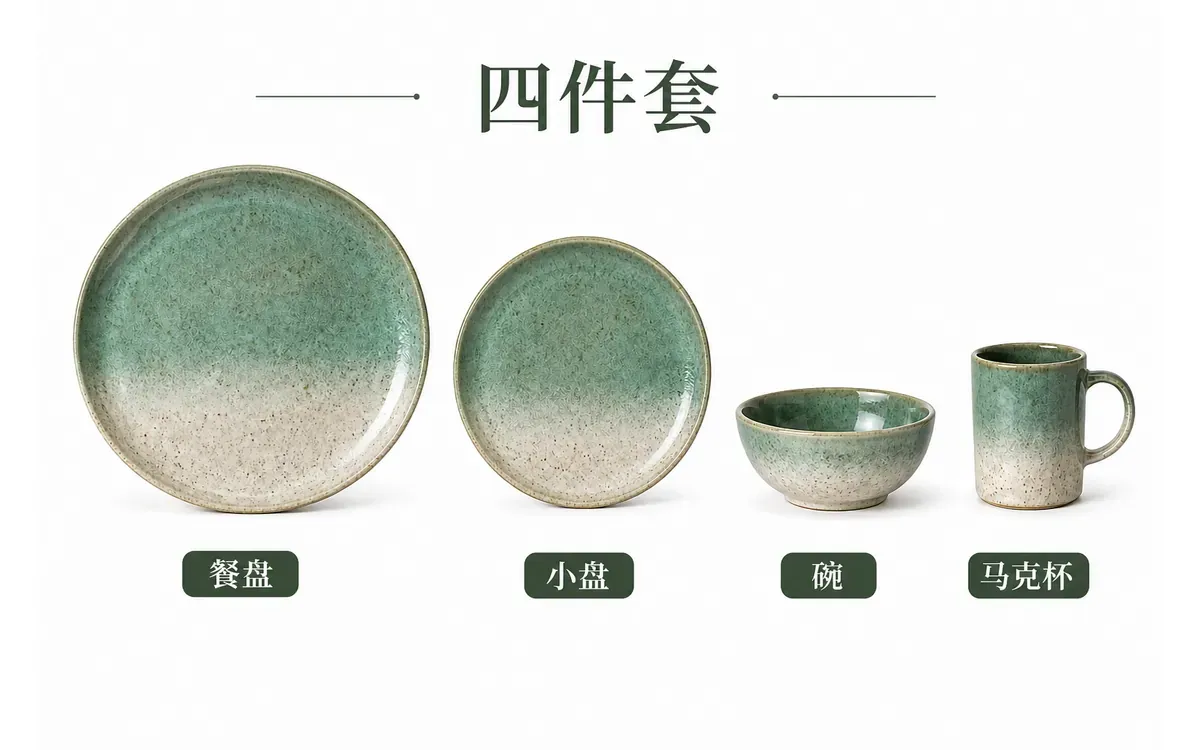
Each item in the sales combination appears individually, while scene props are excluded from the main product photos.
III. How should capacity and dimensions be measured accurately? They cannot be inferred from scene photos.
For plates, at least the outer diameter should be recorded; for bowls and cups, both height and the capacity measurement method used by the brand should be noted. Arrows must point to the actual start and end points, and it should be clearly indicated whether measurements are taken up to the rim or the handle. Images showing a cup filled to the brim, soup being served, or rice being presented cannot substitute for capacity testing.
This article recommends adding proportional diagrams to help buyers intuitively understand sizes. Reference images of an adult holding the item or standard table settings may be included, but all specification numbers must come from actual measurements and should not be inferred based on hand size.
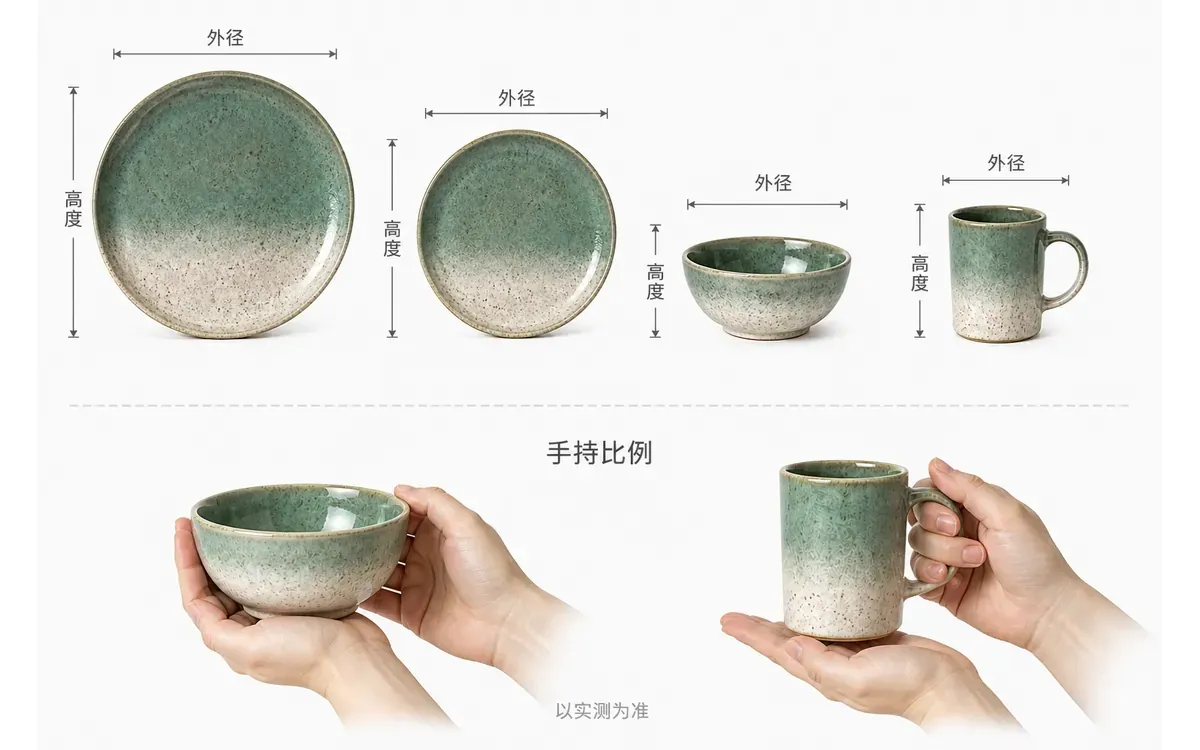
Arrows indicate the measurement boundaries, while handheld images only serve to provide visual proportions.
IV. Table setting diagrams can illustrate usage and proportions, but they do not demonstrate functional performance.
Breakfast illustrations can show how cups pair with small plates, while main meal scenes can clarify the proportions among plates, bowls, and utensils. Scene photos may feature some pieces from the set, but additional items should not be added or duplicated, as this could mislead buyers into thinking extra pieces would be shipped along with their order. Food depicted is solely meant to explain how the items are used and what the finished product looks like; it does not confirm that the tableware is suitable for ovens, microwaves, or dishwashers.
When expanding scene settings, you can use the same set of tableware to create breakfast, dinner, and single-serving scenarios. During inspection, check each piece individually—shape, cup handle orientation, glaze color, and quantity—and any additional items should either be clearly labeled as props or avoided altogether.
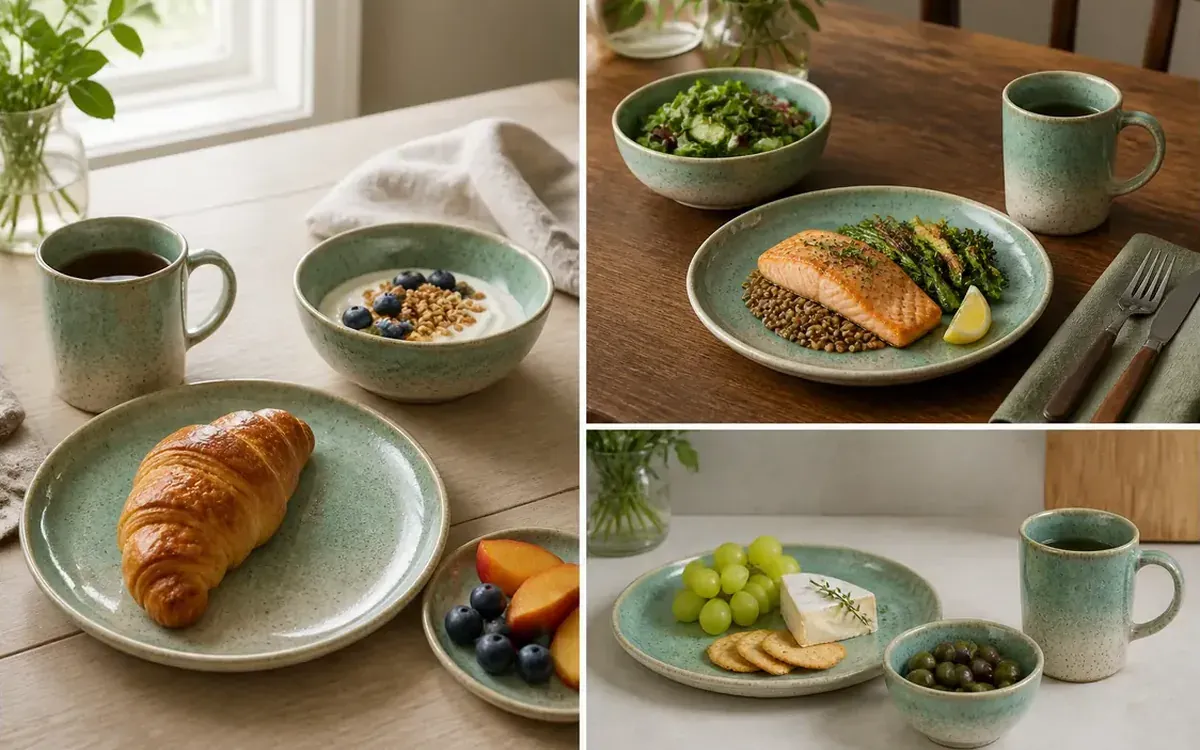
Scenes may include some pieces from the set, but duplicating items or making claims about additional features is prohibited.
V. Whether stacking and packaging are trustworthy depends on whether contact points and contents can be restored.
Stacking diagrams first assess whether plate bottoms rest in appropriate positions and whether cup handles pass through bowl walls, then evaluate the overall space occupied by the set. These diagrams can illustrate relationships between shapes but cannot guarantee scratch-free handling. Packaging diagrams should follow the actual sequence of interleaving paper, foam padding, and cardboard boxes; wooden frames or storage baskets not included in the order should not appear.
Buyers should be able to recount the exact sales combination from the unfolded packaging diagram. If four pieces are shown in the photo, the package must contain exactly those same four items; moreover, the shapes and glaze colors visible on the front side must remain identifiable even amid protective materials.
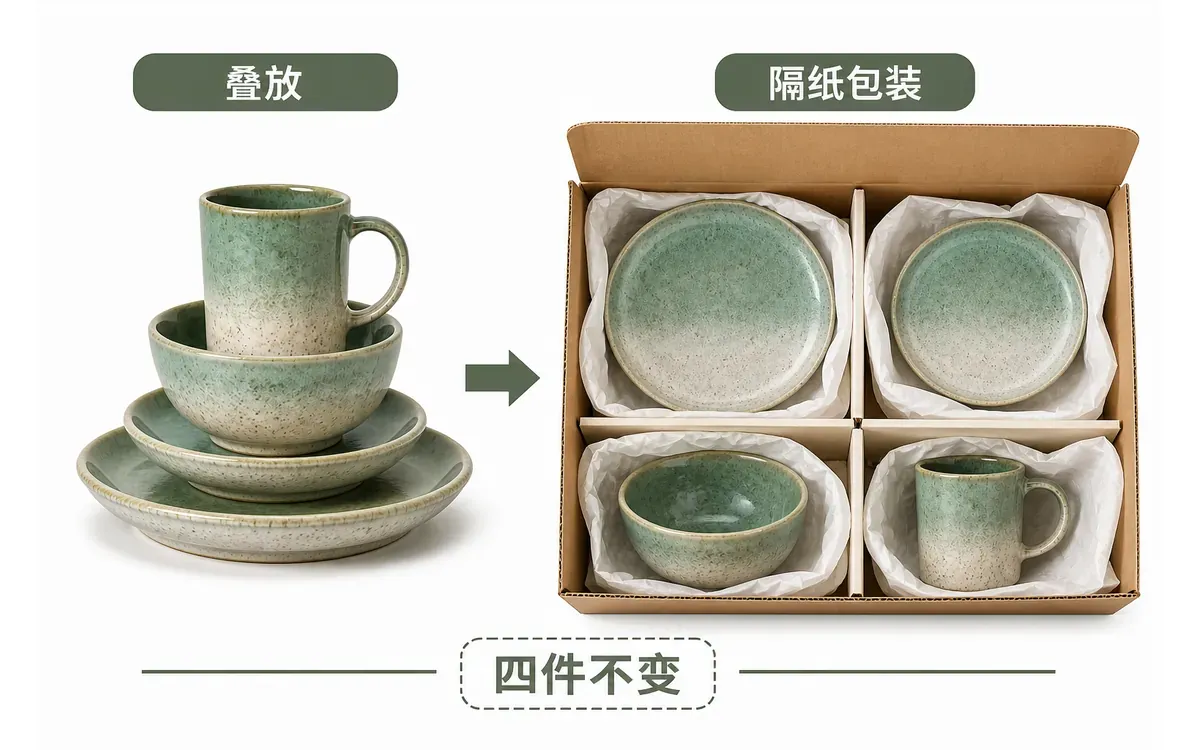
Stacking checks contact relationships, while packaging verifies whether the original sales combination can be reassembled piece by piece.
VI. Common issues with Etsy ceramic tableware product images
1. On which image should the signature on the back of the tableware be displayed?
It should be placed in a separate image focusing on the base or back details, ensuring that text and patterns remain legible. If there are batch variations in the signature, specify which version the buyer might receive; do not use a single fixed image to represent all batches.
2. Can different glaze variants share the same table setting scene?
Yes, they can share composition and camera angles, but every piece shown in the image must belong to the current glaze variant—do not simply adjust the overall color tone. Texture, edge colors, and highlights of the glaze should be checked individually.
3. Can a single replacement item and a full set sale use the same main image?
Not recommended. The main image for a single replacement item should only display the specific piece being sold, whereas the main image for a full set should showcase the complete set. Partial detail images may be shared between the two, but the intended buyer and quantity must be clearly distinguished in the first image.

AI Image Tool Built for E-commerce Teams
For new product launches, advertising, and promotional campaigns, use AI to generate product images, scene visuals, ad creatives, and short video assets — making content production faster.