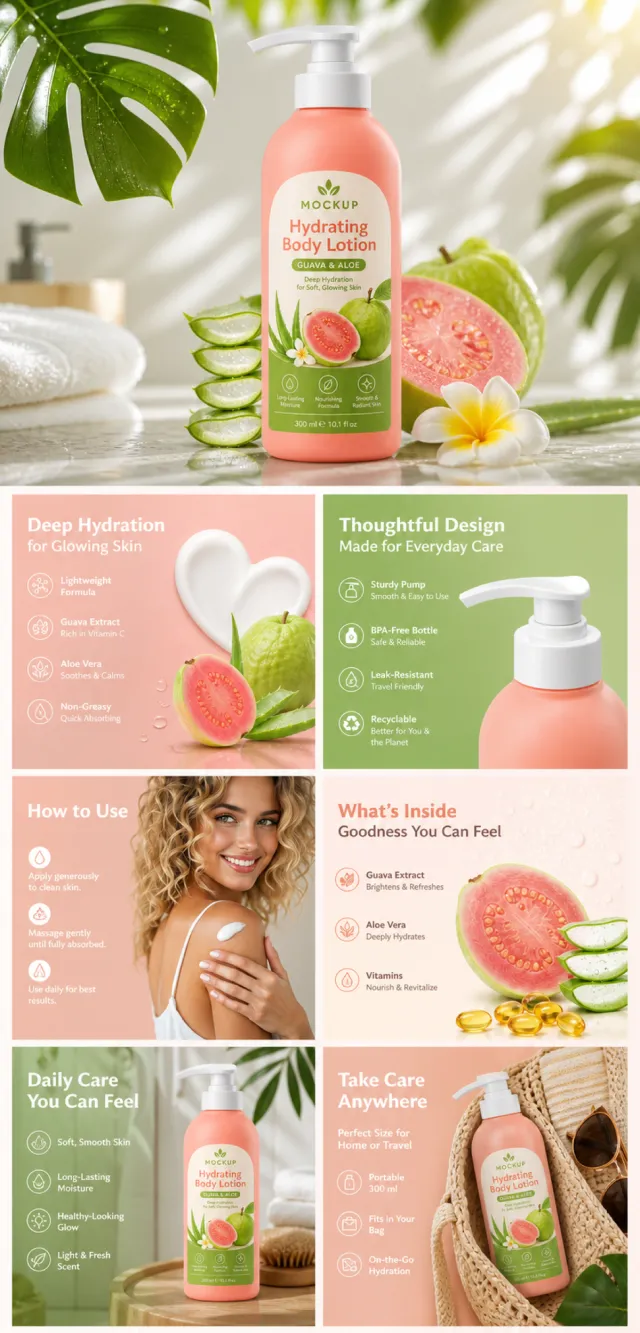
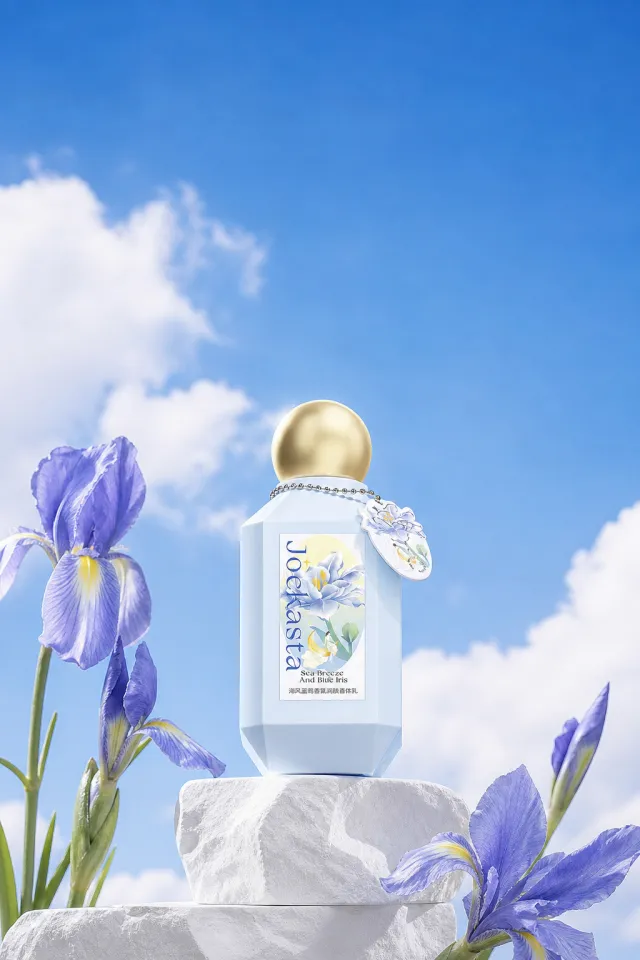
产品定义: 设计一瓶香氛身体乳。唯一产品外观母体为烟粉珊瑚半透明圆角三角扁椭圆瓶,左右有对称浅腰线,肩部呈柔和多面扇形;象牙白长弧泵头朝前,哑光铜色宽颈环连接泵腔;米白纵向圆拱标签内有深莓色花线图与细铜线。标签只出现“MOCKUP”“FRAGRANCE BODY LOTION”“FIG + AMBER”“300 mL”。泵头按下后,活塞、泵腔、止回阀、吸管与前向出液嘴形成连续路径。所有画面保持七个产品指纹和自然比例,不得非等比拉伸。 全局画面: 生成固定宽度 1200px、自然高度的完整单画布 A+ 竖图,共 3 个外层模块。主色为腮红奶油、烟粉珊瑚、深莓和铜金;高对比斜体衬线标题搭配清晰无衬线正文。乳霜丝带和铜色细曲线连续贯穿三个模块,模块以色调变化分层,不使用白色或近白色机械分隔线,不拼接。 模块 1,香氛首屏,相对高度 1.0: 左侧约 46% 为两行超大斜体标题、单行产品类型、两行说明、一行斜体日常短语及四枚普通圆形线性图标;右侧约 54% 为超大瓶体立在暖象牙石台上,后方有雕塑感乳霜旋涡,周围布置重新设计的紫色无花果切面、白色橙花和半透明琥珀树脂。少量花瓣跨越中线但不遮文案。 完整文案: “VELVET HOUR” “FRAGRANCE BODY LOTION” “A soft floral-fruit scent with a smooth, conditioned finish.” “A LITTLE RITUAL FOR EVERY DAY.” “SMOOTH SPREAD” “LIGHT FEEL” “DAILY MOISTURE” “LAYERED SCENT” 模块 2,香调与成分复合模块,相对高度 1.18: 左侧约 47% 为同一瓶体轻微倾斜,置于连续乳霜丝带、无花果、橙花和琥珀木片的新静物台景中。右上为一张圆角香调卡,严格分成三列;右中为三条横向成分说明,每条含圆形材质图和两行说明;全宽底部是一张圆角横条,分成三个等宽无数字信息单元。保持四层嵌套关系,不能拆成普通等宽网格。 完整文案: “FRAGRANCE NOTES” “TOP NOTE” “BRIGHT FIG” “HEART NOTE” “NEROLI BLOOM” “BASE NOTE” “AMBER WOOD” “NIACINAMIDE” “For a smoother-looking finish.” “SHEA BUTTER” “For rich everyday conditioning.” “CAFFEINE” “A familiar cosmetic ingredient in the daily blend.” “LIGHTWEIGHT FEEL” “SOFT AFTER-FEEL” “SCENTED FINISH” 模块 3,使用与收束,相对高度 0.72: 左侧约 55% 为重新设计的双手微距:一手保持瓶体,手指向下压象牙泵头,乳液从前向嘴连续落入另一只张开的掌心;泵头、颈环和瓶体比例必须正确。左上负空间放斜体标题和两条编号说明。右侧约 45% 为同一瓶体直立,配新的无花果、橙花和琥珀木静物,右下放两行大号斜体收束句。底部深莓色细条内有三个等宽普通信息项。 完整文案: “HOW TO USE” “1 PUMP 3–4 DOLLOPS” “Massage over legs, arms, and dry areas.” “2 TAKE IN THE SCENT” “Let the soft fig-floral notes settle.” “SMOOTH SKIN. WARM SCENT.” “300 mL” “PUMP BOTTLE” “STORE COOL & DRY” 全局禁止项: 不得改变瓶体轮廓、肩部、腰线、泵头方向、铜色颈环、标签与文字层级;不得出现原品牌或新造品牌,品牌槽只保留 MOCKUP;不得出现木槿、兰花、松果原组合;不得出现消费调查百分比、参与人数、评分、评论、皮肤科测试、无动物实验认证、官方徽章、医疗功效、绝对吸收承诺、价格、折扣、购买按钮、二维码、网址、互动控件、水印、模块编号、像素标注、工程字符、乱码或伪文字;不得减少三香调列、三成分行或底部三联信息,不得白线分段、拼接或拉伸产品。