
- 185K
- 428
- $28
Indoor Plant Creative Inspiration
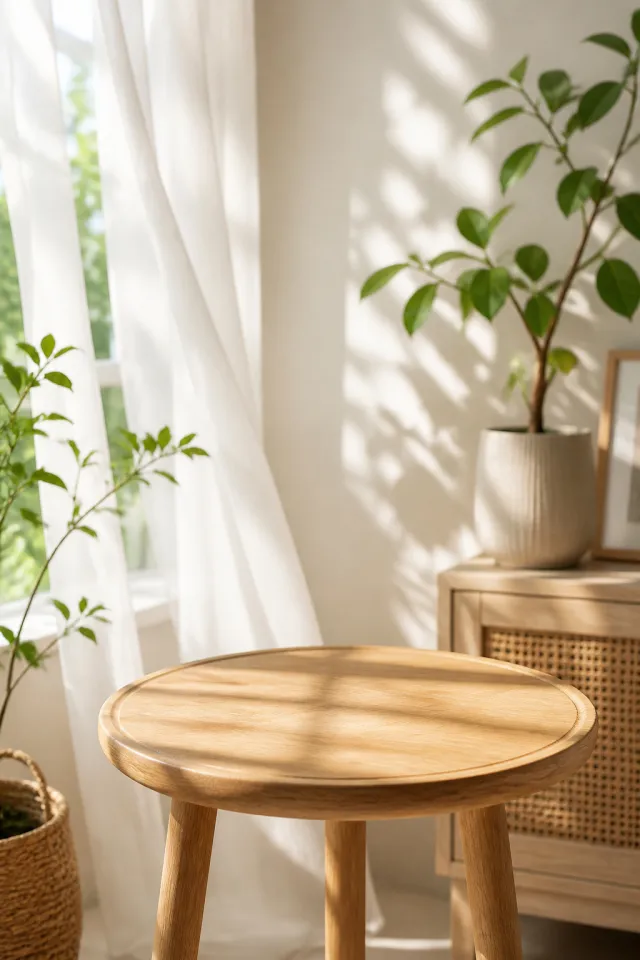
Create a polished vertical 2:3 commercial product display background with an empty product placement area or central display platform, clean full-bleed composition, refined studio lighting, high-quality 3D render or photorealistic product-photography finish, decorative elements that are related to the scene theme but not copied exactly, adjusted colors, positions, angles, proportions, and small details, no readable text, no numbers, no Chinese characters, no watermark, no brand logo, no trademark symbols, no tiny edge text, no dirty edge, no disconnected blank margins, and no border.
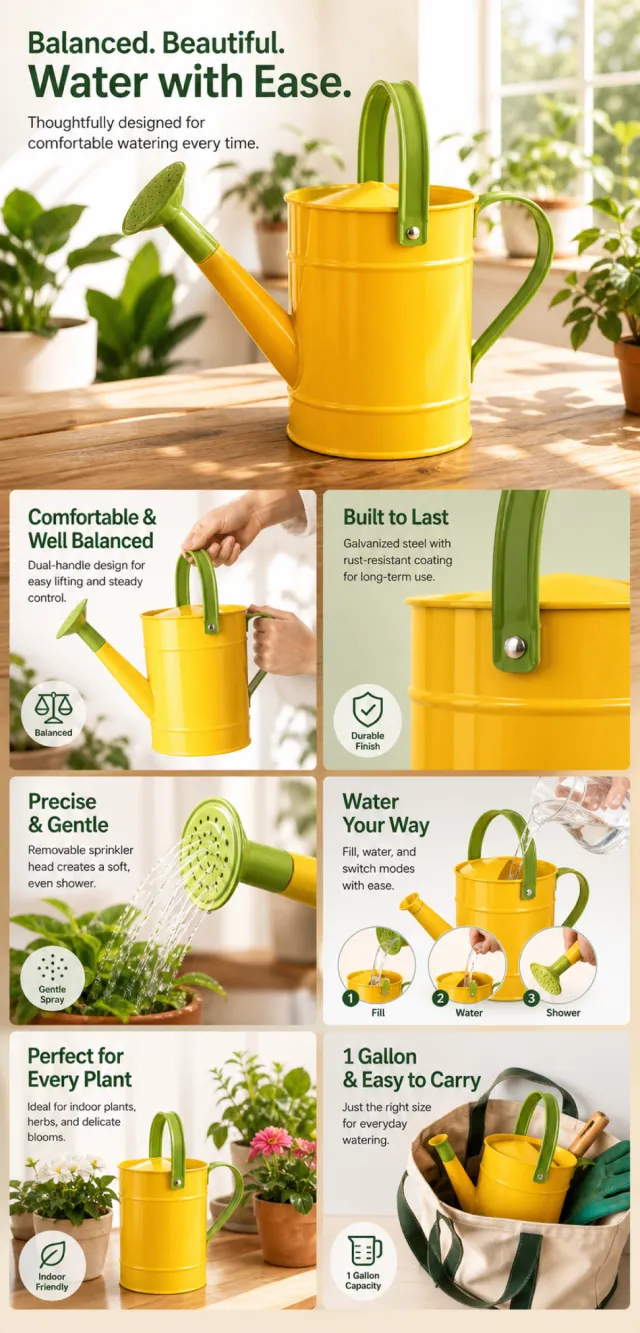
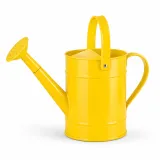
【Execution Route | Must Not Appear on Screen】 If the image-generation tool can be invoked multiple times: concatenate the sharing rules with A–F separately and execute six times; each time, generate only one independent 1000×1000 square image, resulting in six sub-images. If only a single generation is allowed: use a 2:3 vertical canvas measuring 1200×2500, with approximately 30% at the top reserved for the product’s main visual integrated into the background, and arrange the remaining area into a 2-column × 3-row grid labeled A/B, C/D, and E/F. All six cards should be equal in size, with an aspect ratio close to 1:1. Do not use a 1:1 outer canvas, nor full-width cards, cross-column cards, merged cards, borders, frames, or white margins. 【Sharing Rules】 The provided product reference image serves as the sole basis for the product’s appearance, structure, color, quantity, accessories, and relative proportions. Product orientation: a yellow-green watering can; grip, fine nozzle, indoor plants, watering steps, and portability. The product itself, along with any newly generated characters, animals, props, and text, must maintain natural proportions—stretching, flattening, or non-uniform scaling is prohibited—and the background must extend fully across all four edges. Branding must uniformly follow the MOCKUP style; remove original branding, logos, watermarks, contact information, social media accounts, platform details, gibberish, and irrelevant content. Copywriting should be concise, clear, and credible, retaining the language of the reference image without adding unsubstantiated absolute claims or medical promises. A–F are merely control markers and must not appear on screen. 【A | Core Selling Point】 Highlight the product’s most important value and its complete main subject; keep the headline short and clear. 【B | Structure and Materials】 Showcase key structural elements, materials, or accessories through close-up shots or simple annotations, adhering to the product’s intended direction. 【C | Real-World Use】 Generate natural scenes featuring people, animals, or everyday life to demonstrate realistic usage, ensuring proportions and actions appear believable. 【D | Details and Steps】 Use close-ups, step-by-step illustrations, or flowcharts to explain operations, textures, interfaces, storage solutions, or care instructions. 【E | Lifestyle】 Depict how the product naturally integrates into home, commuting, outdoor, travel, or work settings. 【F | Sets and Portability】 Accurately present the product, its accessories, quantities, and storage relationships; do not add components absent from the reference image.
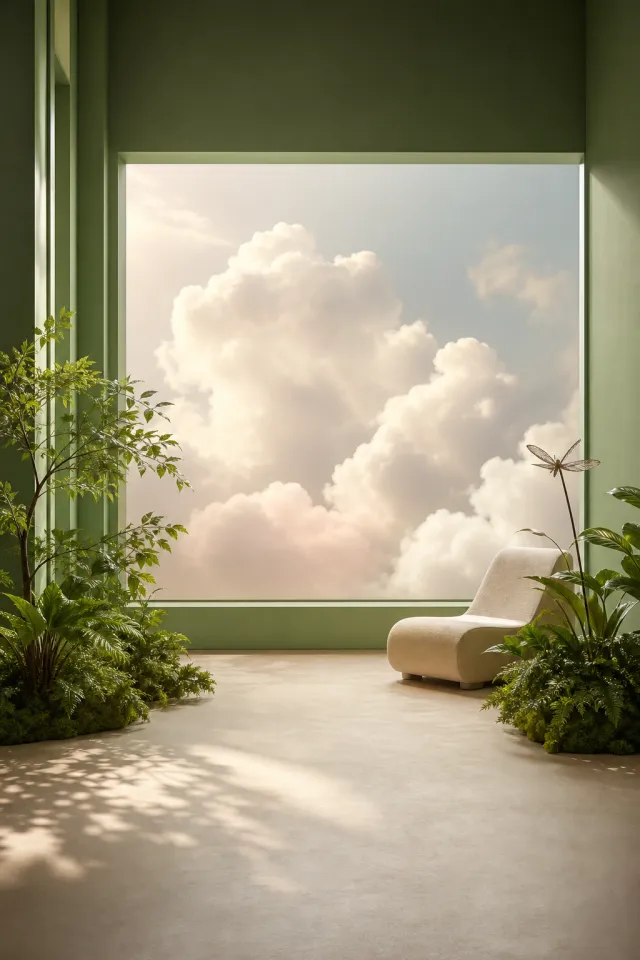
Use case: product-mockup Asset type: Vertical ecommerce product display background, 2:3. Prompt: Regenerate a green indoor garden window product display background with soft clouds, vertical 2:3. Keep a deep green interior wall, large rectangular window opening onto soft white and cream clouds, indoor plants near the left and right edges, a clean smooth foreground floor for product placement, a low lounge chair or sculptural seat on the right, and a delicate dragonfly-like decorative element near the window. Change plant species and positions, cloud shapes, chair angle, window frame thickness, floor texture, and light direction so the result is related but not identical. No readable text is preserved. Remove watermark, logo, corner marks, tiny edge text, fake text, dirty borders, disconnected white margins, and black edges. No readable text, no numbers, no Chinese characters, no English words, no brand logo, no trademark symbols, no packaging, no people, no clutter in the product placement area. Polished photorealistic 3D render, calm lifestyle product background, clean full-bleed composition.