Repair Cream Creative Inspiration

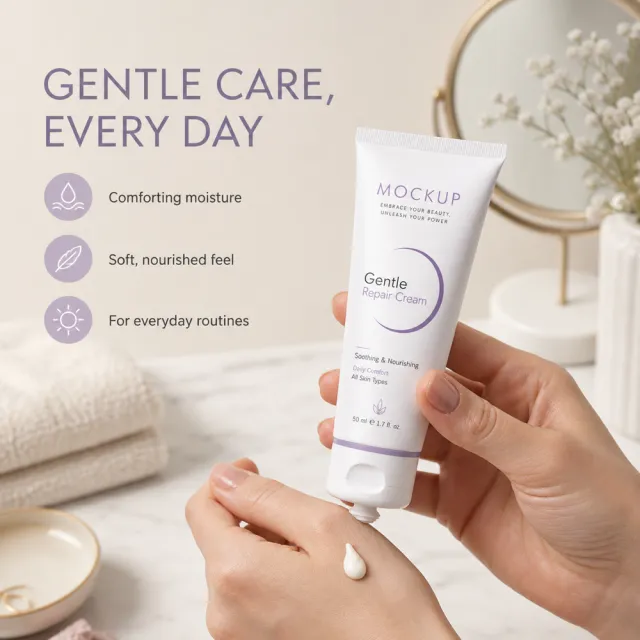
Create ONE independent Amazon listing image. Use a 1:1 square 1000x1000 px canvas with a full-bleed composition, no white border, no side bars, no collage, and no multi-panel layout. Use the visual reference only for composition, camera angle, lighting, color mood, scene, typography hierarchy, and information structure. Do not copy its original wording or graphic assets. Use the provided white-background product image as the sole product source. Preserve its exact silhouette, geometry, parts, materials, colors, proportions, controls, labels, connectors, and accessory count. Keep the product complete, naturally assembled, and undistorted. Do not replace, merge, stretch, crop, or redesign the product. Do not show cutaway, exploded, anatomical, or internal views. Preserve any approved MOCKUP identity already present on the product image, but do not copy brands or logos from the visual reference. Rewrite all visible copy in English with fresh, plausible, category-appropriate wording. Do not reuse the visual reference's original brand names, phrases, statistics, certifications, filenames, or source graphics. Avoid unsupported medical, legal, safety, or absolute claims. Do not include Chinese or mixed-language instructions. Do not include execution-mode notes, source names, file paths, reconstruction history, or metadata. Keep all typography legible and inside the canvas. Show the skincare tube in a calm vanity or hand-held care scene with a soft texture cue. Use fresh copy such as “GENTLE CARE, EVERY DAY”, “Comforting texture”, “Light moisture”, and “A simple daily routine”.
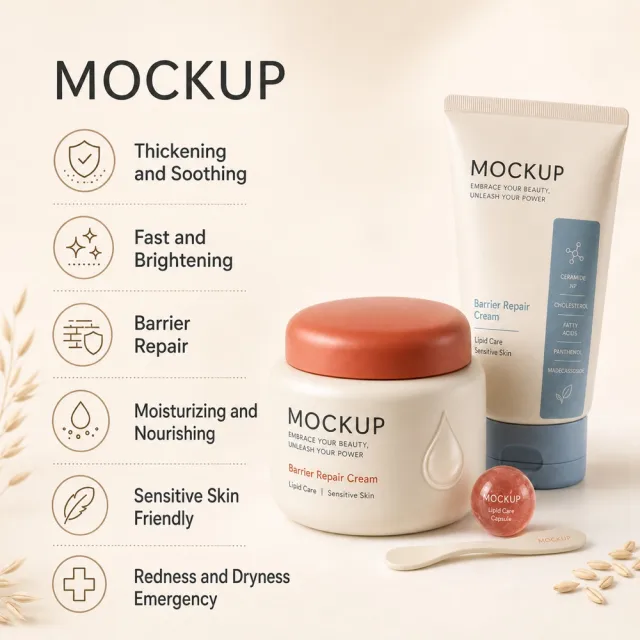
## Use case Advertising and marketing. ## Asset type Amazon secondary product benefit image, 1:1 aspect ratio. ## Input image Use `711_product.png` as the sole product-appearance reference and `711_amazon.jpg` as the approved visual reference. ## Product fidelity Preserve exactly the input product's colors, materials, construction, patterns, quantity, accessories, and package relationships; do not invent or remove components. ## Primary request Reproduce the approved premium Amazon benefit image for SKU 711, retaining its product-specific visual identity. ## Source design to preserve Preserve the approved image's palette, background atmosphere, graphic motifs, composition, information modules, and visual rhythm; do not replace it with a generic template. ## Subject and composition Keep the complete product dominant and unobstructed, with at least 6% safe margin; preserve the approved model-worn composition when the product is apparel. ## Scene and graphics Retain the category-appropriate gradients, lines, icons, textures, ingredient or material details, and accents visible in the approved design. ## Typography system Use a category-appropriate display face for the title and a highly legible complementary face for body copy; maintain clear differences in size, weight, alignment, and color. ## Adaptive layout Measure the available space first, wrap by meaning, and adapt title scale, line count, icon/text grid, spacing, and module size to the actual English copy while preserving the approved visual rhythm. ## Exact visible text (Text (verbatim)) - `MOCKUP` - `Thickening and Soothing` - `Fast and Brightening` - `Barrier Repair` - `Moisturizing and Nourishing` - `Sensitive Skin Friendly` - `Redness and Dryness Emergency` ## Offer filtering Omit prices, currencies, discounts, price comparisons, coupons, gifts, limited-time wording, savings claims, purchase calls to action, and all other promotional messaging. Do not replace them with generic offers. ## Recommended information hierarchy Lead with the title and core benefit, followed by three concise feature groups and, only when relevant, one objective specification or set quantity. Flexible grouping is allowed without changing meaning. ## Constraints English is the only visible language. Keep the product faithful, complete, sharp, mobile-readable, and free of watermarks and invented brands. Preserve the exact visible text listed above. ## Avoid Garbled or misspelled text, missing core copy, translated visible copy, text overlap, rigid generic typography, distorted products, wrong accessory counts, invented claims, unrelated props, low-resolution icons, clutter, and promotional language.