Stainless Steel Creative Inspiration

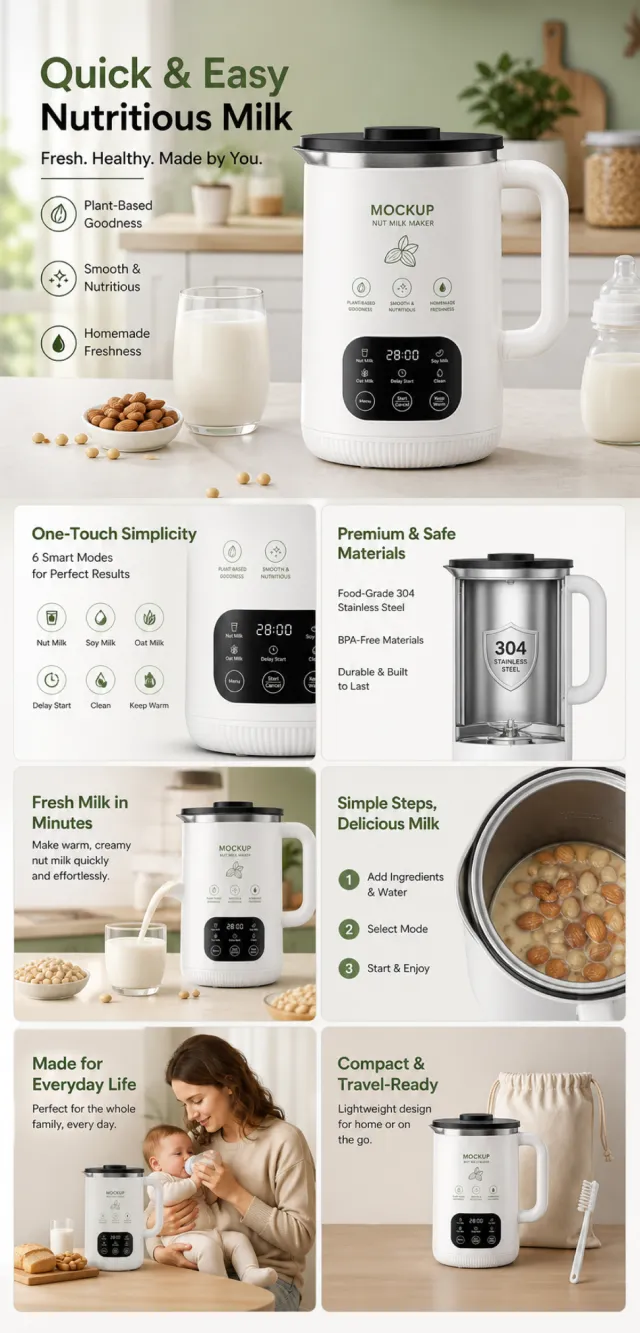
【Execution Route | Must Not Appear on Screen】 If the image-generation tool can be invoked multiple times: concatenate the sharing rules with A–F separately and execute six times; each time, generate only one independent 1000×1000 square image, resulting in six sub-images. If single‑shot generation is permitted: use a 2:3 vertical canvas measuring 1200×2500, with the top approximately 30% reserved for the product’s main visual integrated into the background, and arrange A/B, C/D, and E/F in two columns by three rows to form a six‑grid layout. All six cards should be equal in size, with visual proportions close to 1:1. Do not use an outer 1:1 canvas, nor full‑width cards, cross‑column cards, merged cards, borders, frames, or white margins. 【Sharing Rules】 The provided product reference image serves as the sole basis for the product’s appearance, structure, color, quantity, accessories, and relative proportions. Product orientation: white powdered milk/milk maker, transparent water tank, control panel, and liquid outlet; kitchen setting, buttons, water tank, and cleaning. The product itself, along with any newly generated characters, animals, props, or text, must maintain natural proportions—stretching, flattening, or non‑uniform scaling is prohibited—and the background must extend fully across all four edges. Branding must uniformly follow the MOCKUP style; remove original branding, logos, watermarks, contact information, social media accounts, platform details, gibberish, and irrelevant content. Copywriting should be concise, clear, and credible, retaining the language of the reference image, without adding unverified absolute claims or medical promises. A–F are merely control markers and must not appear on screen. 【A | Core Selling Point】 Highlight the product’s most important value and its complete main subject; keep the title short and clear. 【B | Structure and Materials】 Showcase the product’s key structures, materials, or components using close-up shots or simple annotations, adhering to the product’s orientation. 【C | Real‑World Use】 Generate natural human/animal figures or everyday scenes to demonstrate realistic usage, ensuring proportions and actions are believable. 【D | Details and Steps】 Use close-ups, step-by-step illustrations, or flowcharts to explain operations, textures, interfaces, storage, or care instructions. 【E | Lifestyle】 Depict how the product naturally integrates into family life, commuting, outdoor activities, travel, or work settings. 【F | Sets and Portability】 Accurately present the product, its accessories, quantities, and storage relationships; do not add any elements absent from the reference image.

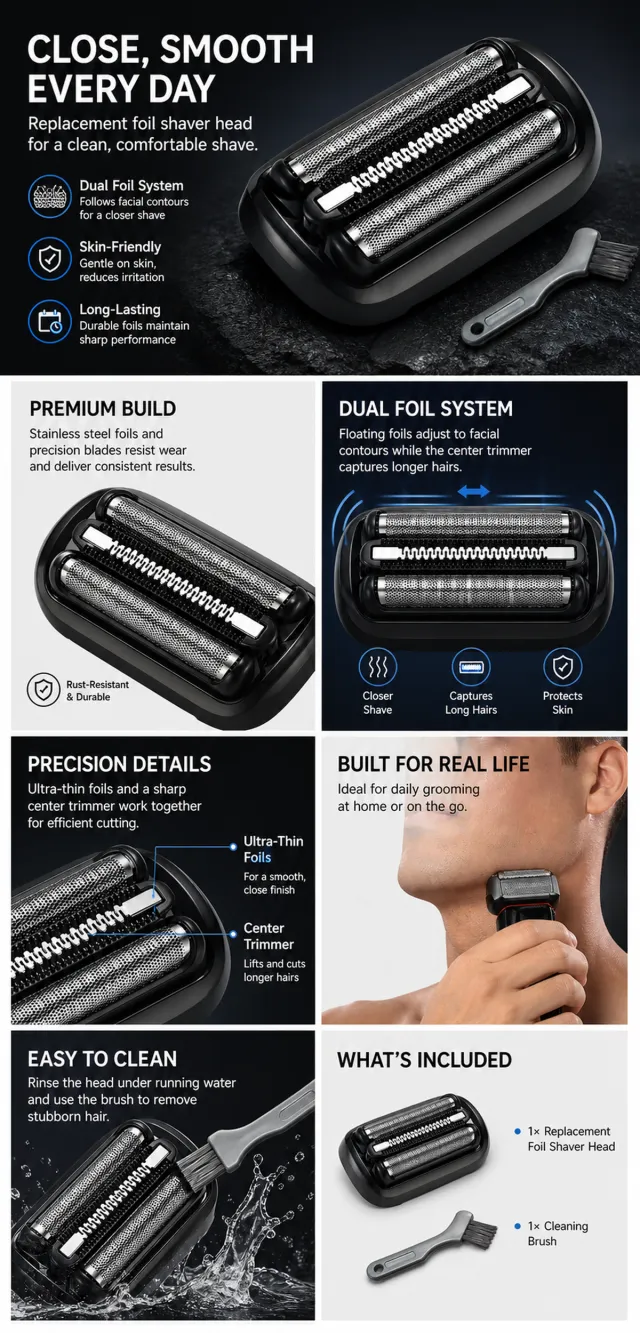
【Execution Route | Do Not Display】 If the image-generation tool can be invoked multiple times: concatenate the sharing rules with A–F separately, execute six times, generating only one 1000×1000 square image per run. If only a single image can be generated at a time: first set the interface/API to a 2:3 portrait orientation (do not use Auto), then arrange A/B, C/D, and E/F into a 2-column × 3-row grid; ensure all six cells are equal in size and maintain a visual aspect ratio of 1:1. The outer canvas must not be 1:1. 【Sharing Rules】 The provided product reference image serves as the sole basis for the product. The product is a replacement foil shaver head and cleaning brush. Strictly adhere to the reference image’s shape, structure, color, quantity, included accessories, texture, and relative proportions; do not fabricate any unseen components, specifications, or functions. Use high-quality Amazon commercial photography and clear English infographics, with colors derived from the product itself, realistic lighting, and a clean layout. Maintain natural proportions for the product, figures, hands, icons, and props—no stretching, flattening, or independent scaling is allowed. Titles, products, and labels must remain fully within the safe zone, while the background extends seamlessly across all four edges. Only use MOCKUP for branding. No white borders, vertical sidebars, transparent fill‑ins, watermarks, contact information, social media accounts, original brand logos, platform identifiers, garbled text, distorted body parts, or unverified copywriting are permitted. A–F are solely control markers and must not be displayed. 【A | Product Overview】Title: “PRODUCT OVERVIEW.” The hero composition should fully showcase the product along with the accessories depicted in the reference image, accompanied by three brief English icon‑based selling points that highlight only visible or verifiable information. 【B | Materials & Design】Title: “MATERIAL & DESIGN.” Present materials, structure, surface finishes, or styling through an overall view of the product combined with 2–3 close-up details; ensure clear labeling without inventing material names. 【C | Function in Focus】Title: “FUNCTION IN FOCUS.” Demonstrate key functions within realistic usage scenarios; maintain natural proportions among characters, hands, and the product, with authentic gestures and easily understandable information. 【D | Details Up Close】Title: “DETAILS UP CLOSE.” Highlight 2–4 critical structural or operational areas using magnified details and short captions; do not alter the product’s underlying structure. 【E | Everyday Use】Title: “MADE FOR REAL LIFE.” Depict usage, portability, storage, or maintenance scenarios consistent with the product; retain only one clear theme and avoid duplication with C. 【F | Packaging Contents】Title: “WHAT’S INCLUDED.” Lay out or neatly arrange the actual products and accessories shown in the reference image, ensuring accurate quantities and relative sizes; if the contents cannot be confirmed, instead display visible specifications, dimensional relationships, or step-by-step instructions, without fabricating numbers.

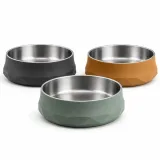
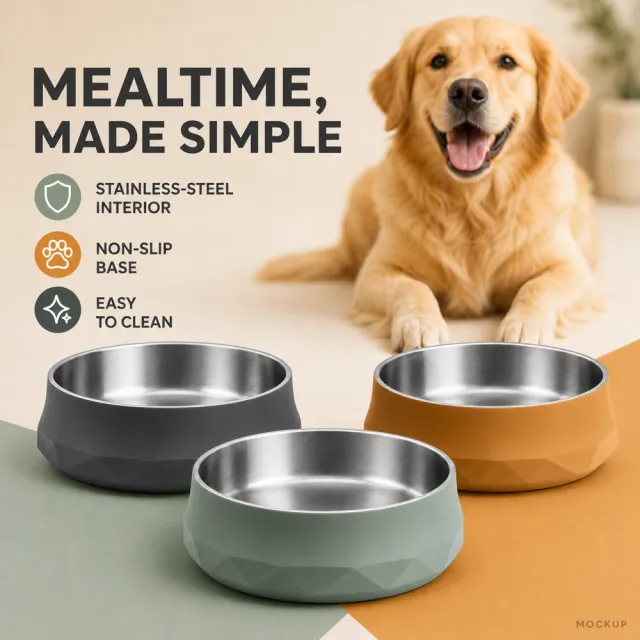
【Output Rules | Do Not Display】 Generate only one 1000×1000, 1:1 Amazon Listing secondary image. No collage images, six-grid layouts, multi-card grids, or multiple scenes are allowed. 【Sharing Rules】 Use the provided product reference image as the sole basis for the product. Product: three-bowl pet set. Copywriting must be in English, and brand placeholders should use MOCKUP only. Visuals should follow high-end commercial e-commerce photography standards—clear imagery, distinct layering, and concise, easy-to-read copy. The product’s appearance, structure, color, quantity, accessories, and relative proportions must match the reference image; products, people, icons, and props must maintain natural proportions. All essential information must remain within the safe zone, with the background extending fully to all four edges. External white borders, vertical borders on left and right, transparent edge fillers, watermarks, contact information, social media accounts, platform details, original brands, gibberish, irrelevant content, or unverified claims regarding efficacy or specifications are prohibited. Titles must not be displayed. 【Image Composition】 Create a warm lifestyle feature image titled “MEALTIME, MADE SIMPLE.” Ensure the redesigned product maintains visual consistency and natural proportions. Keep the source language (English) for visible copy. Remove original trademarks, platform branding, template titles, watermarks, contact details, accounts, and comparative claims. Do not fabricate certifications, materials, capacities, medical benefits, nutritional claims, performance figures, or any other unsupported specifications. Keep all critical content within the safe area, and use MOCKUP exclusively as the brand placeholder.

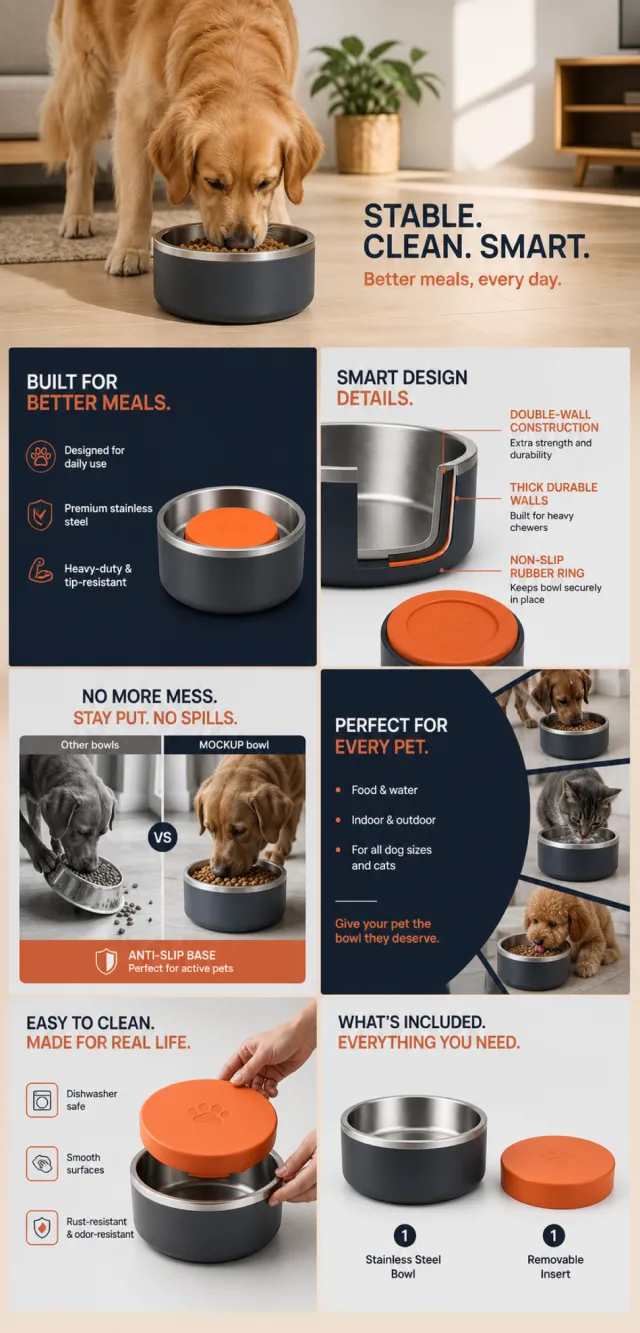
【Execution Route | Must Not Appear on Screen】 If the image-generation tool can be invoked multiple times: concatenate the sharing rules with A–F separately and execute six times; each time, generate only one independent 1000×1000 square image, resulting in six sub-images. If single‑shot generation is permitted: use a 2:3 vertical canvas measuring 1200×2500, with the top approximately 30% reserved for the product’s main visual integrated into the background, and arrange the remaining area into a 2‑column × 3‑row grid labeled A/B, C/D, and E/F. All six cards should be equal in size, with an aspect ratio close to 1:1. Do not use a 1:1 outer canvas, nor full‑width cards, cross‑column cards, merged cards, borders, frames, or white margins. 【Sharing Rules】 The provided product reference image serves as the sole basis for the product’s appearance, structure, color, quantity, accessories, and relative proportions. Product orientation: dark gray stainless steel pet bowl paired with an orange detachable inner liner; non‑slip, easy to clean, suitable for dogs and cats. The product itself, along with any newly generated characters, animals, props, or text, must maintain natural proportions—stretching, flattening, or non‑uniform scaling is prohibited—and the background must extend fully across all four edges. Branding must uniformly follow MOCKUP; remove original branding, logos, watermarks, contact information, social media accounts, platform details, gibberish, and irrelevant content. Copywriting should be concise, clear, and credible, retaining the language of the reference image without adding unsubstantiated absolute claims or medical promises. A–F are merely control markers and must not appear on screen. 【A | Core Selling Point】 Highlight the product’s most important value and its primary subject; keep the headline short and clear. 【B | Structure & Material】 Showcase key structural elements, materials, or components using close-up shots or simple annotations, adhering to the product’s intended orientation. 【C | Real‑World Use】 Generate natural scenes featuring people, animals, or everyday settings to demonstrate realistic usage, ensuring proportions and actions appear believable. 【D | Details & Steps】 Use close-ups, step-by-step instructions, or flowcharts to explain operations, textures, interfaces, storage solutions, or care-related details. 【E | Lifestyle】 Illustrate how the product seamlessly integrates into daily life scenarios such as home, commuting, outdoor activities, travel, or work. 【F | Sets & Portability】 Accurately depict the product, its accessories, quantities, and storage relationships; do not add any components absent from the reference image.

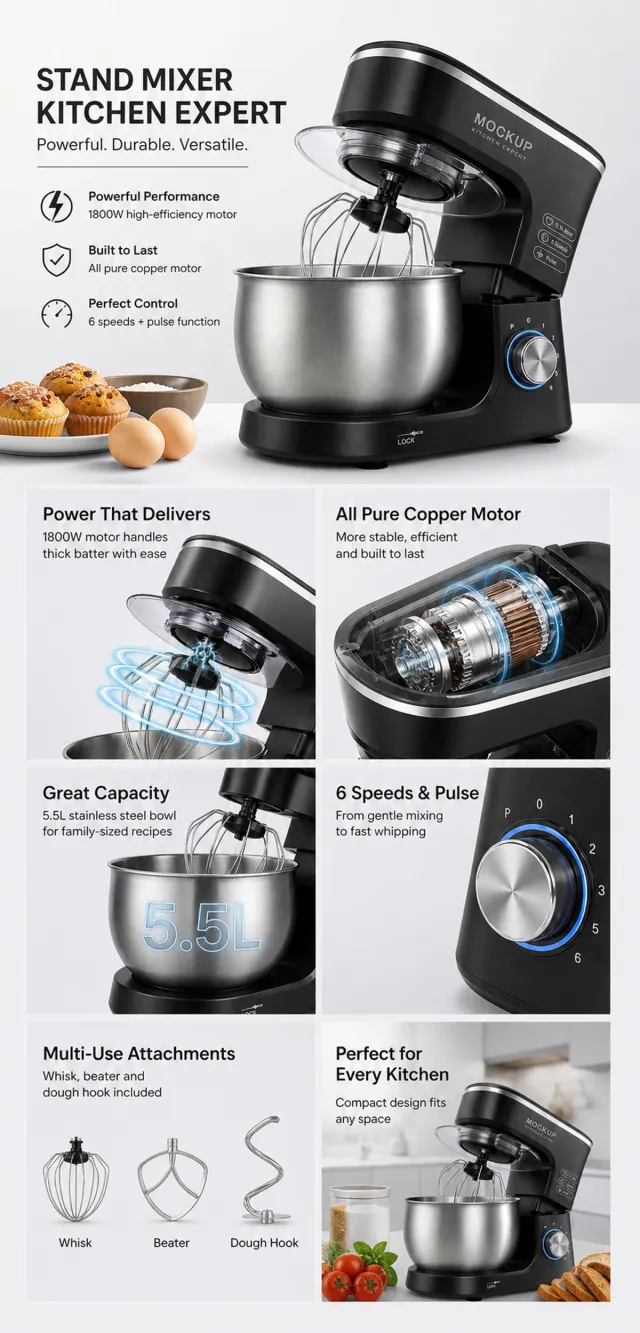
【Execution Routing | Do Not Display】 If the image-generation tool can be invoked multiple times: concatenate the sharing rules with A–F separately, execute six times, generating one 1000×1000 square image each time; do not submit all modules at once. If only one image can be generated per invocation: set the interface or API to a 2:3 vertical format and disable Auto mode; a recommended size is 1200×1800. Arrange the modules in a 2-column × 3-row grid labeled A/B, C/D, and E/F, ensuring equal size for all six modules while maintaining a 1:1 aspect ratio. If the platform enforces a 1:1 ratio, switch to using an Agent or generate each module individually. 【Sharing Rules】 The provided product reference image serves as the sole basis for the product. Product: stand mixer. Copywriting must be in English, with brand placeholders replaced by MOCKUP only. Visuals should adhere to premium commercial e-commerce photography and stable graphic design standards. The product’s appearance, structure, color, quantity, accessories, and relative proportions must match the reference image; product, people, icons, and props must maintain natural proportions. All essential information must remain within the safe zone, with the background extending fully across all four edges. External white borders, vertical borders on left and right, transparent fill-in borders, watermarks, contact details, social media accounts, platform information, original branding, gibberish, irrelevant content, or unverified claims regarding efficacy or specifications are prohibited. Headlines must not be displayed. A–F must not appear. 【A | Core Selling Point】Write concise copy in English that highlights this theme, focusing on the core value through a full-product main visual. 【B | Usage Instructions】Provide brief English copy that explains the usage process, combinations, or key operations. 【C | Applicable Scenarios】Present authentic, credible, and product-relevant usage scenarios in English. 【D | Functional Details】Offer succinct English copy that uses close-up shots, cross-sections, or icons to illustrate structural and functional details. 【E | Daily Maintenance】Outline simple methods for use, cleaning, storage, or maintenance in English. 【F | Specification List】Present materials, specifications, packaging details, or credible comparisons in English—do not fabricate parameters.

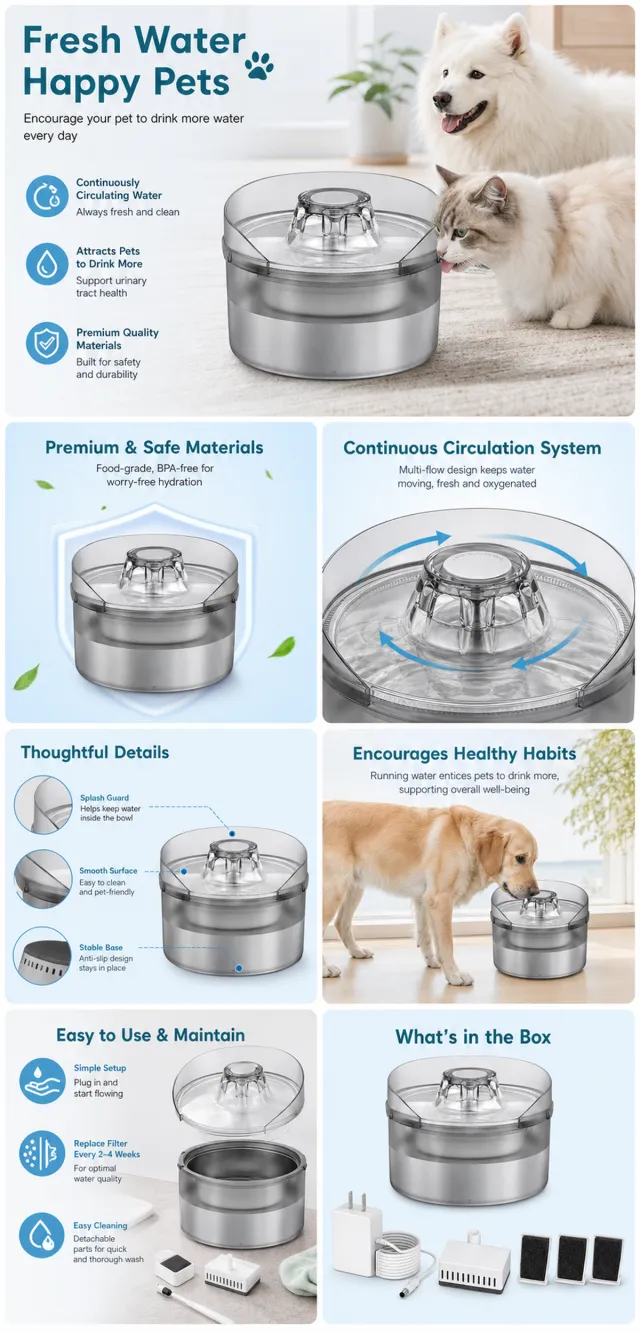
【Execution Route | Do Not Display】 If the image-generation tool can be invoked multiple times: concatenate the sharing rules with A–F separately, execute six times, generating only one 1000×1000 square image each time. If only a single image can be generated at a time: first set the interface/API to a 2:3 portrait orientation (do not use Auto), then arrange A/B, C/D, and E/F into a 2-column × 3-row grid; ensure all six cells are equal in size and maintain a visual aspect ratio of 1:1. The outer canvas must not be 1:1. 【Sharing Rules】 The provided product reference image serves as the sole basis for the product. The product is a pet water fountain. Strictly adhere to the reference image’s shape, structure, color, quantity, accessories, texture, and relative proportions; do not fabricate any unseen components, specifications, or functions. Use high-quality Amazon commercial photography and clear English infographics, with colors derived from the product itself, realistic lighting, and a clean layout. Maintain natural proportions for the product, figures, hands, icons, and props—no stretching, flattening, or independent scaling is allowed. Titles, products, and labels must remain fully within the safe area, while the background extends across the entire frame on all four sides. Only use MOCKUP for branding. No external white borders, vertical edges on either side, transparent fill-in borders, watermarks, contact information, social media accounts, original brand logos, platform identifiers, garbled text, distorted limbs, or unverified copywriting are permitted. A–F are solely control markers and must not be displayed. 【A | Product Overview】Title: “PRODUCT OVERVIEW.” The hero composition should fully showcase the product along with the accessories depicted in the reference image, accompanied by three brief English icon-based selling points that highlight only visible or verifiable information. 【B | Materials & Design】Title: “MATERIAL & DESIGN.” Present materials, structure, surface finishes, or styling through an overall view of the product combined with 2–3 close-up details; ensure clear labeling without inventing material names. 【C | Function in Focus】Title: “FUNCTION IN FOCUS.” Demonstrate key functions within realistic usage scenarios; maintain natural proportions among people, hands, and the product, with authentic actions and easily understandable information. 【D | Details Up Close】Title: “DETAILS UP CLOSE.” Highlight 2–4 critical structural or operational areas using magnified close-ups and short labels; do not alter the product’s structure. 【E | Everyday Use】Title: “MADE FOR REAL LIFE.” Showcase usage, portability, storage, or maintenance scenarios consistent with the product; keep only one clear theme and avoid duplication with C. 【F | Packaging Contents】Title: “WHAT’S INCLUDED.” Lay out or neatly arrange the actual products and accessories shown in the reference image, ensuring accurate quantities and relative sizes; if the list cannot be confirmed, instead display visible specifications, dimensional relationships, or usage steps without fabricating numbers.

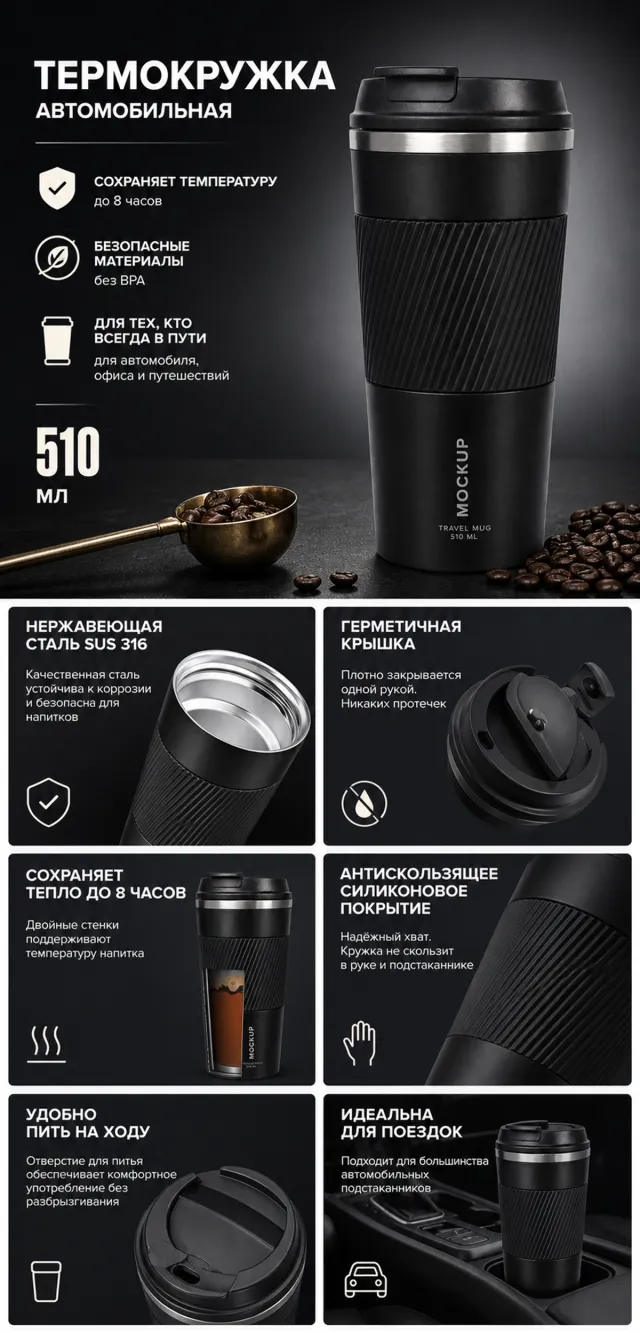
【Execution Routing | Do Not Display】 If the image-generation tool can be invoked multiple times: concatenate the sharing rules with A–F separately, execute six times, generating one 1000×1000 square image each time; do not submit all modules at once. If only one image can be generated per run: set the interface or API to a 2:3 portrait orientation and disable Auto; a recommended size is 1200×1800. Arrange A/B, C/D, and E/F into a 2-column × 3-row grid of six modules, ensuring equal module sizes and maintaining a 1:1 aspect ratio. If the platform enforces a 1:1 ratio, switch to using an Agent or generate each module individually. 【Sharing Rules】 The provided product reference image serves as the sole product basis. Product: compact espresso maker. Copywriting must be in Russian, with brand placeholders replaced by MOCKUP only. Visuals should employ premium commercial e‑commerce photography and stable graphic design. The product’s appearance, structure, color, quantity, accessories, and relative proportions must match the reference image; products, people, icons, and props must maintain natural proportions. All essential information must remain within the safe zone, with the background extending fully to all four edges. External white borders, vertical sidebars, transparent fill‑ins, watermarks, contact details, social media accounts, platform information, original branding, garbled text, irrelevant content, or unverified claims regarding efficacy or specifications are prohibited; titles must not be displayed. A–F must not appear. 【A | Core Selling Point】Write concise Russian copy focusing on this theme, using the full product main visual to highlight core value. 【B | Usage Instructions】Provide brief Russian copy addressing this theme, illustrating the usage process, compositional relationships, or key operations. 【C | Applicable Scenarios】Offer succinct Russian copy centered on this theme, showcasing realistic, credible, and product‑related use cases. 【D | Functional Details】Present brief Russian copy highlighting this theme, using close-ups, cross-sections, or icons to explain structural and functional specifics. 【E | Daily Maintenance】Craft concise Russian copy covering this theme, demonstrating methods for use, cleaning, storage, or upkeep. 【F | Specification List】Compose brief Russian copy addressing this theme, listing materials, specifications, packaging details, or providing credible comparisons—without fabricating parameters.

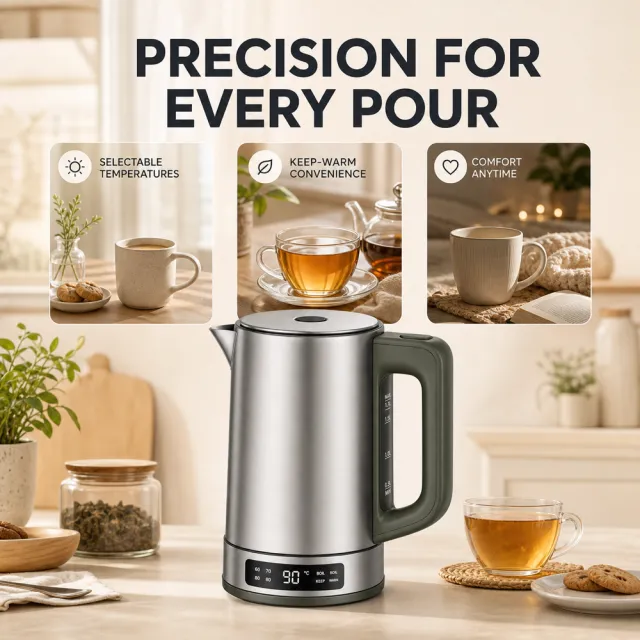
【Output Rules | Do Not Display】 Generate only one 1000×1000, 1:1 Amazon Listing secondary image. No collages, six-grid layouts, multi-card grids, or multiple images are allowed. 【Sharing Rules】 Use the provided product reference image as the sole basis for the product. Product: temperature-control kettle. Copywriting must be in English, and brand placeholders should use MOCKUP only. Visuals should follow high-end commercial e-commerce photography standards—sharp imagery, clear hierarchy, and concise, easy-to-read copy. The product’s appearance, structure, color, quantity, accessories, and relative proportions must match the reference image; products, people, icons, and props should maintain natural proportions. All essential information must remain within the safe zone, with the background extending fully to all four edges. External white borders, vertical borders on left and right, transparent fill-in borders, watermarks, contact details, social media accounts, platform information, original brand logos, gibberish, irrelevant information, or unverified claims regarding efficacy or specifications are prohibited. Titles must not appear. 【Image Composition】 Create a warm, modern kitchen feature image with neutral controls and pouring callouts. Ensure the redesigned product remains visually consistent and naturally proportioned. Keep the source language (English) for visible copy. Remove source trademarks, platform branding, template titles, watermarks, contact details, social media accounts, and comparative claims. Do not fabricate certifications, materials, capacities, medical benefits, nutritional benefits, performance figures, or any other unsupported specifications. Keep all critical content within the safe area, and use MOCKUP exclusively as the brand placeholder.

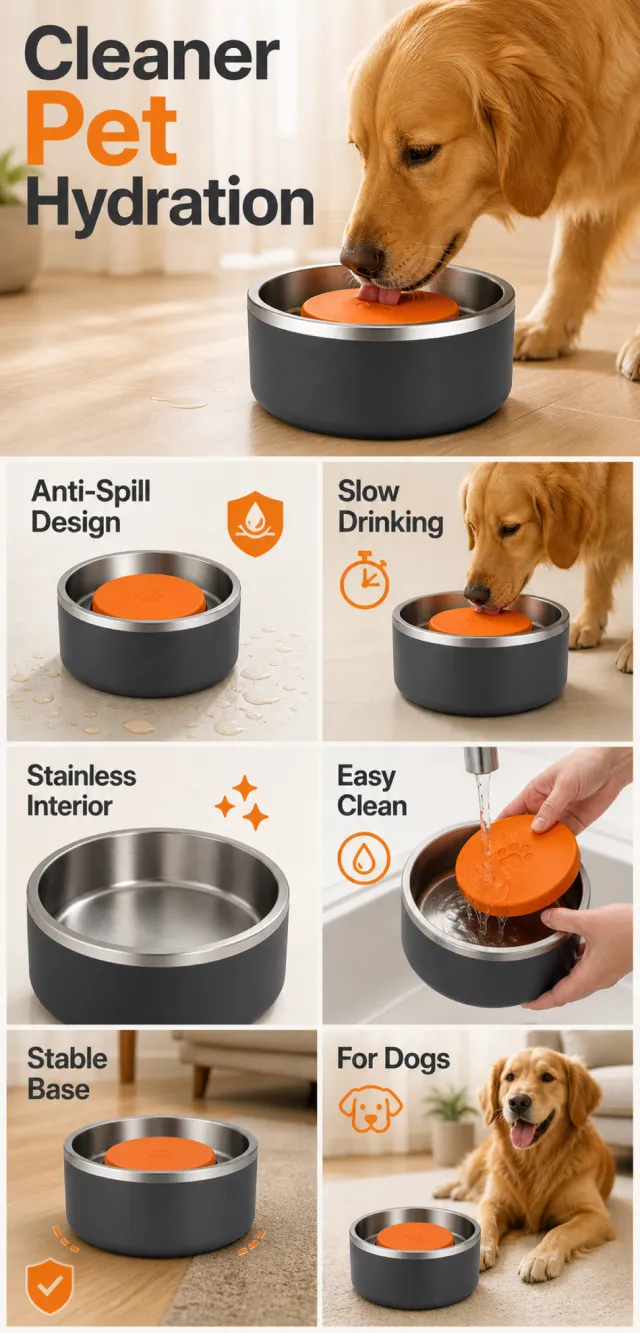
【Execution Routing | Do Not Display】 If the image-generation tool can be invoked multiple times: concatenate the sharing rules with A–F separately, execute six times, generating one 1000×1000 square image each time; do not submit all modules at once. If only one image can be generated per run: set the interface or API to a 2:3 portrait orientation and disable Auto mode; a recommended size is 1200×1800. Arrange A/B, C/D, and E/F into a 2-column × 3-row grid of six modules, ensuring equal module sizes and maintaining a 1:1 aspect ratio. If the platform enforces a 1:1 ratio, switch to using an Agent or generate each module individually. 【Sharing Rules】 Use the provided product reference image as the sole basis for the product. Product: spill-resistant dog water bowl. Copywriting must be in English, with brand placeholders replaced by MOCKUP only. Visuals should incorporate charcoal, orange, stainless steel, and cream. The product’s appearance, structure, color, quantity, accessories, and relative proportions must match the reference image; products, figures, icons, and props must maintain natural proportions. All essential information must remain within the safe zone, with the background extending fully to all four edges. Prohibit white borders around the perimeter, vertical borders on the left and right, transparent fill-in borders, watermarks, contact information, social media accounts, platform details, original branding, garbled text, irrelevant information, or unverified claims regarding efficacy or specifications; control titles must not appear. A–F must not be displayed. 【A | Theme】Copy: “Cleaner Pet Hydration”; use the full product main visual to prominently convey its core value. 【B | Theme】Copy: “Anti-Spill Design”; design an independent square image centered around this theme, ensuring no overlap in selling points, composition, or product angles with other modules. 【C | Theme】Copy: “Slow Drinking”; design an independent square image centered around this theme, ensuring no overlap in selling points, composition, or product angles with other modules. 【D | Theme】Copy: “Stainless Interior”; design an independent square image centered around this theme, ensuring no overlap in selling points, composition, or product angles with other modules. 【E | Theme】Copy: “Easy Clean”; design an independent square image centered around this theme, ensuring no overlap in selling points, composition, or product angles with other modules. 【F | Theme】Copy: “Stable Base”; “For Dogs”; design an independent square image centered around this theme, ensuring no overlap in selling points, composition, or product angles with other modules.

Views
172K
Sales
428
Revenue
$183K
Views
2M
Sales
1K
Revenue
$530

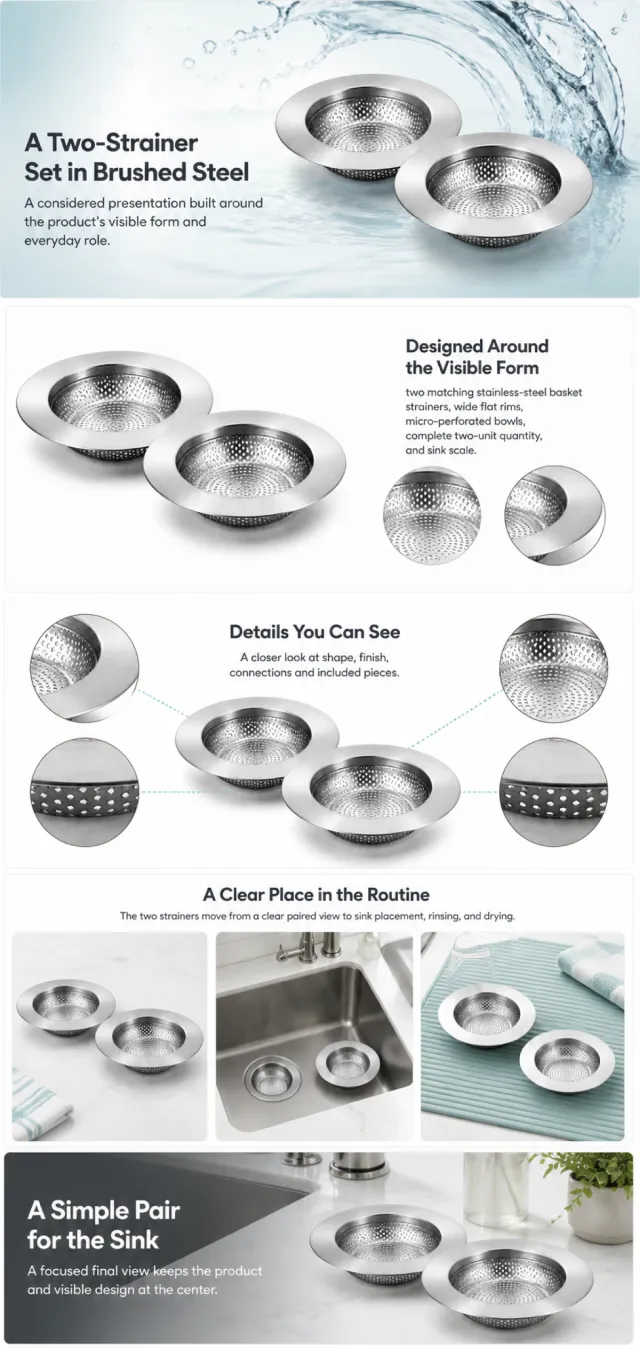
Using the supplied reference image as the sole product reference, create an Amazon A+ design preview for a two-pack sink-strainer set. Preserve exact geometry, proportions, colors, construction, quantity, accessories, and scale. Visible details: two matching stainless-steel basket strainers, wide flat rims, micro-perforated bowls, complete two-unit quantity, and sink scale. Do not invent hidden parts or claims. Visual system: brushed steel, white, pale aqua, and charcoal. Composition motifs: water arcs, perforation macros, circular comparison crops, and clean sink scenes. Alternate a wide banner, asymmetric overview, centered detail graphic, three-scene sequence, and wide closing scene. Use readable sans-serif type and mobile-safe margins. Build this official A+ module order. Keep every module independently complete; never split copy or product details. MODULE 1 — Image with text overlay — introduction Exact headline: “A Two-Strainer Set in Brushed Steel” Exact supporting copy: “A considered presentation built around the product’s visible form and everyday role.” Layout: wide image-led hero; dominant complete product and large safe headline area. MODULE 2 — Single image with side text — product overview Exact headline: “Designed Around the Visible Form” Exact supporting copy: “two matching stainless-steel basket strainers, wide flat rims, micro-perforated bowls, complete two-unit quantity, and sink scale.” Layout: large three-quarter product, side text field, and two detail crops. MODULE 3 — Four-image and text — visible evidence Exact headline: “Details You Can See” Exact supporting copy: “A closer look at shape, finish, connections and included pieces.” Layout: centered product with four rounded macro callouts; show only visible facts. MODULE 4 — Multiple image and text — routine or use setting Exact headline: “A Clear Place in the Routine” Exact supporting copy: “The two strainers move from a clear paired view to sink placement, rinsing, and drying.” Layout: three framed scenes with consistent product design and newly generated people or animals only when relevant. MODULE 5 — Full-width image with text overlay — closing Exact headline: “A Simple Pair for the Sink” Exact supporting copy: “A focused final view keeps the product and visible design at the center.” Layout: wide editorial scene, strong silhouette, restrained props, safe text area. Create one vertical A+ preview at 1200px width with content-driven height, clear module boundaries, and varied compositions for independent export. Render only the exact copy above. Do not add logos, prices, promotions, QR codes, URLs, contacts, competitors, testimonials, ratings, guarantees, unverified claims, certifications, fake UI, watermarks, pseudo-text, or unrelated labels. Keep all elements natural and mobile-safe.

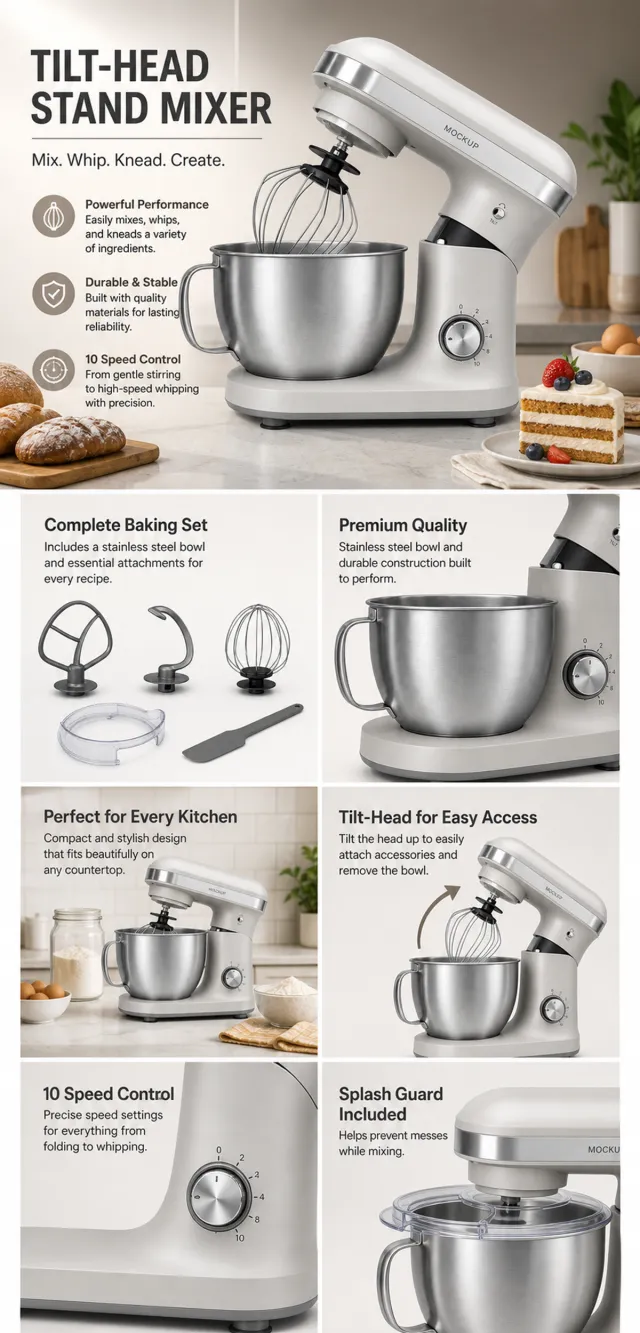
【Execution Routing | Do Not Display】 If the image-generation tool can be invoked multiple times: concatenate the sharing rules with A–F separately, execute six times, generating one 1000×1000 square image each time; do not submit all modules at once. If only one image can be generated per invocation: set the interface or API to a 2:3 portrait orientation and avoid using Auto; a recommended size is 1200×1800. Arrange A/B, C/D, and E/F into a 2-column × 3-row grid of six modules, ensuring equal module sizes and maintaining a 1:1 aspect ratio. If the platform enforces a 1:1 ratio, switch to an Agent approach or generate each module individually. 【Sharing Rules】 The provided product reference image serves as the sole product basis. Product: tilt-head stand mixer with bowl and baking attachments. Copywriting must be in English, with brand placeholders limited to MOCKUP. Visuals should employ premium commercial ecommerce photography and stable graphic design. The product’s appearance, structure, color, quantity, accessories, and relative proportions must match the reference image; products, people, icons, and props must maintain natural proportions. All essential information must remain within the safe zone, with the background extending fully across all four edges. External white borders, vertical borders on left and right, transparent fill-in borders, watermarks, contact details, social media accounts, platform information, original branding, gibberish, irrelevant content, or unverified claims regarding efficacy or specifications are prohibited. Headlines must not be displayed. A–F must not appear. 【A | Core Selling Point】Write concise English copy that highlights this theme, focusing on the core value through the full product visual. 【B | Usage Instructions】Provide brief English copy addressing this theme, illustrating the usage process, combinations, or key operations. 【C | Applicable Scenarios】Offer succinct English copy centered on this theme, showcasing realistic, credible, and product-relevant usage scenarios. 【D | Functional Details】Present concise English copy highlighting this theme, using close-up shots, cross-sections, or icons to explain structural and functional details. 【E | Daily Maintenance】Craft brief English copy addressing this theme, demonstrating methods for use, cleaning, storage, or maintenance. 【F | Specification List】Compose concise English copy covering this theme, listing materials, specifications, packaging details, or providing credible comparisons—without fabricating parameters.

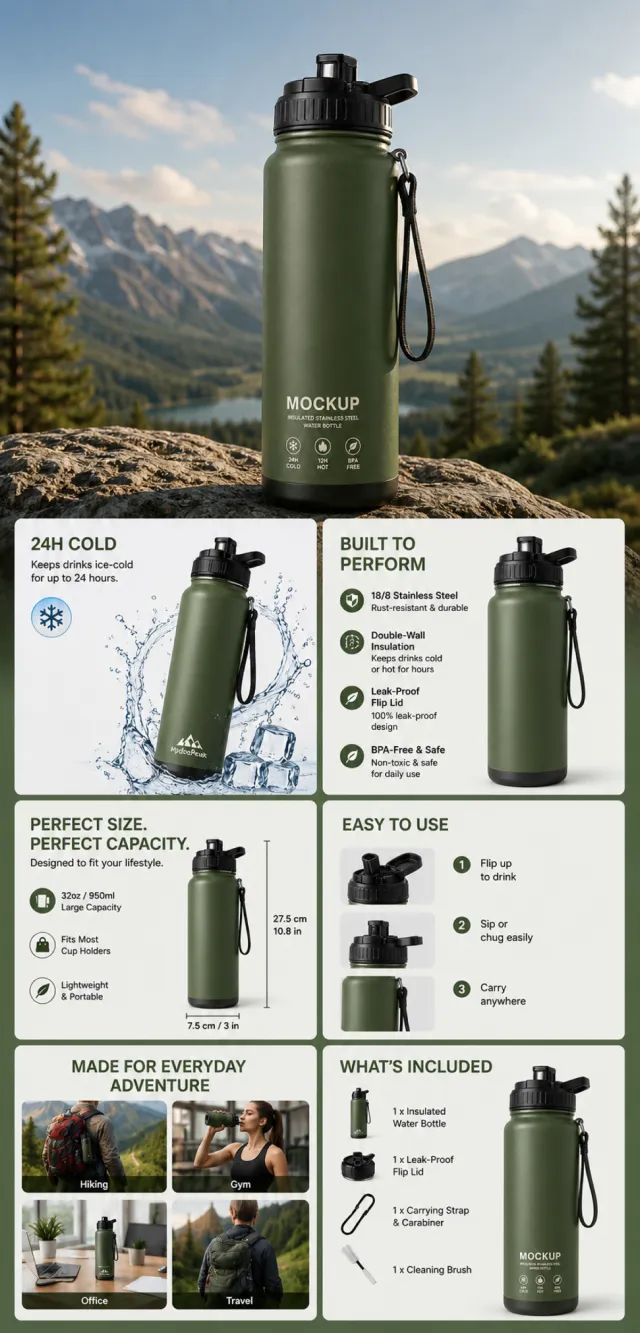
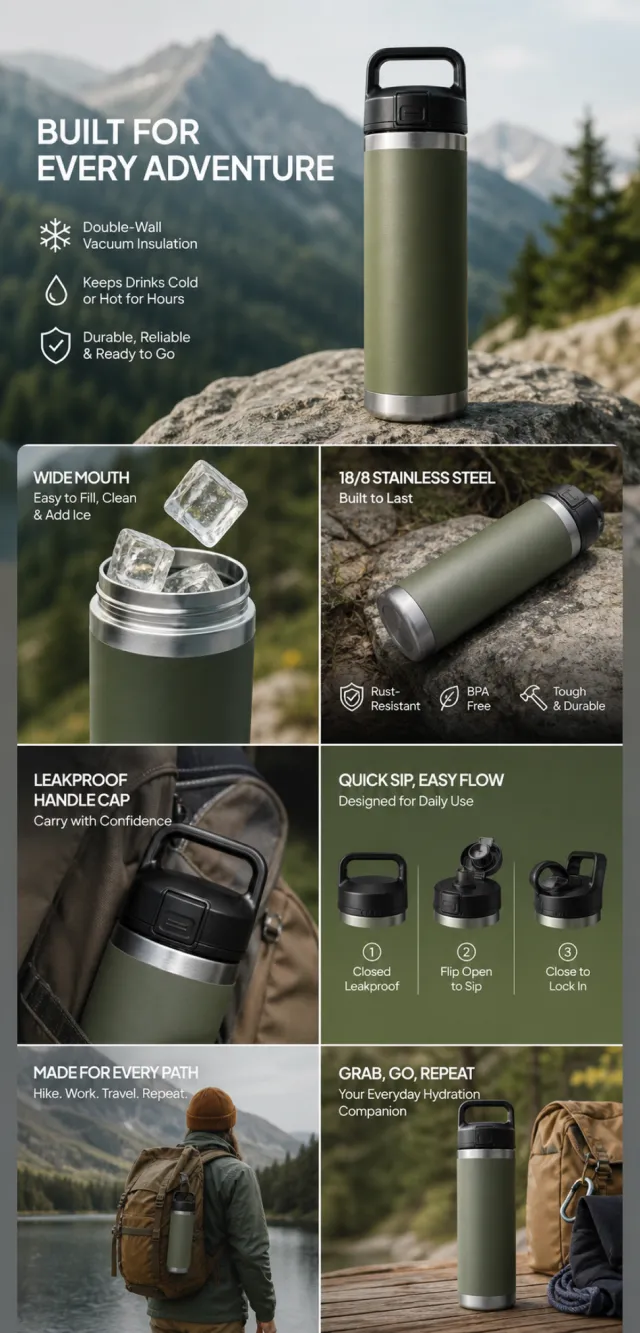
【Execution Route | Must Not Appear on Screen】 If the image-generation tool can be invoked multiple times: concatenate the sharing rules with A–F separately and execute six times; each time, generate only one independent 1000×1000 square image, resulting in six sub‑images. If single‑shot generation is permitted: use a 2:3 vertical canvas measuring 1200×2500, with the top approximately 30% reserved for the product’s main visual integrated into the background, and arrange A/B, C/D, and E/F in two columns by three rows to form a six‑grid layout; all six cards should be equal in size and maintain an aspect ratio close to 1:1. Do not use a 1:1 outer canvas, nor full‑width cards, cross‑column cards, merged cards, borders, frames, or white margins. 【Sharing Rules】 The provided product reference image serves as the sole basis for the product’s appearance, structure, color, quantity, accessories, and relative proportions. Product orientation: olive‑green wide‑mouth thermos bottle, black handle cover, and metal base at the bottle opening; designed for outdoor use, portability, and leak resistance. The product itself, along with any newly generated characters, animals, props, or text, must retain natural proportions—stretching, flattening, or non‑uniform scaling is prohibited—and the background must extend fully across all four edges. Branding must uniformly follow the MOCKUP style; remove original branding, logos, watermarks, contact information, social media accounts, platform details, gibberish, and irrelevant content. Copywriting should be concise, clear, and credible, maintaining the language of the reference image and refraining from adding unsubstantiated absolute claims or medical promises. A–F are merely control markers and must not appear on screen. 【A | Core Selling Point】 Highlight the product’s most important value and its complete main subject; keep the headline short and clear. 【B | Structure and Materials】 Showcase key structural elements, materials, or components using close‑up shots or simple annotations, adhering to the product’s intended orientation. 【C | Real‑World Use】 Generate natural scenes featuring people, animals, or everyday settings to demonstrate realistic usage, ensuring proportions and actions appear believable. 【D | Details and Steps】 Use close‑ups, step‑by‑step instructions, or flowcharts to explain operations, textures, interfaces, storage solutions, or maintenance details. 【E | Lifestyle】 Illustrate how the product seamlessly integrates into daily life—whether at home, during commuting, outdoors, while traveling, or at work. 【F | Sets and Portability】 Accurately depict the product, its accessories, quantities, and storage relationships; do not add any components absent from the reference image.

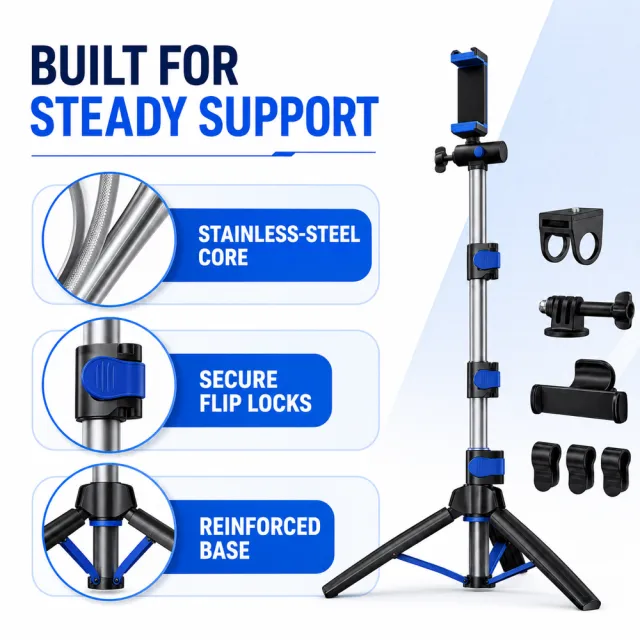
【Output Rules | Do Not Display】 Generate only one 1000×1000, 1:1 Amazon Listing secondary image. No collage images, six-grid layouts, multi-card grids, or multiple scenes are allowed. 【Sharing Rules】 Use the provided product reference image as the sole basis for the product. Product: support pole kit. Copywriting must be in English, and brand placeholders should use MOCKUP only. Visuals should follow high-end commercial e-commerce photography standards—clear imagery, distinct layering, and concise, easy-to-read copy. The product’s appearance, structure, color, quantity, accessories, and relative proportions must match the reference image; products, people, icons, and props must maintain natural proportions. All essential information must remain within the safe zone, with the background extending fully to all four edges. Prohibit white borders around the image, vertical borders on the left and right, transparent edge fillers, watermarks, contact information, social media accounts, platform details, original brand logos, gibberish, irrelevant content, or unverified claims regarding efficacy or specifications. Titles must not appear. 【Image Composition】 Create a clean, installation-oriented feature image that clearly showcases visible components while maintaining contextual relevance. Ensure the redesigned product remains visually consistent and proportionally natural. Preserve the original language (English) for any visible text. Remove source trademarks, platform branding, template titles, watermarks, contact details, social media accounts, and comparative claims. Do not fabricate certifications, materials, capacities, medical benefits, nutritional claims, performance figures, or other unsupported specifications. Keep all critical content within the safe area, using MOCKUP exclusively as the brand placeholder.

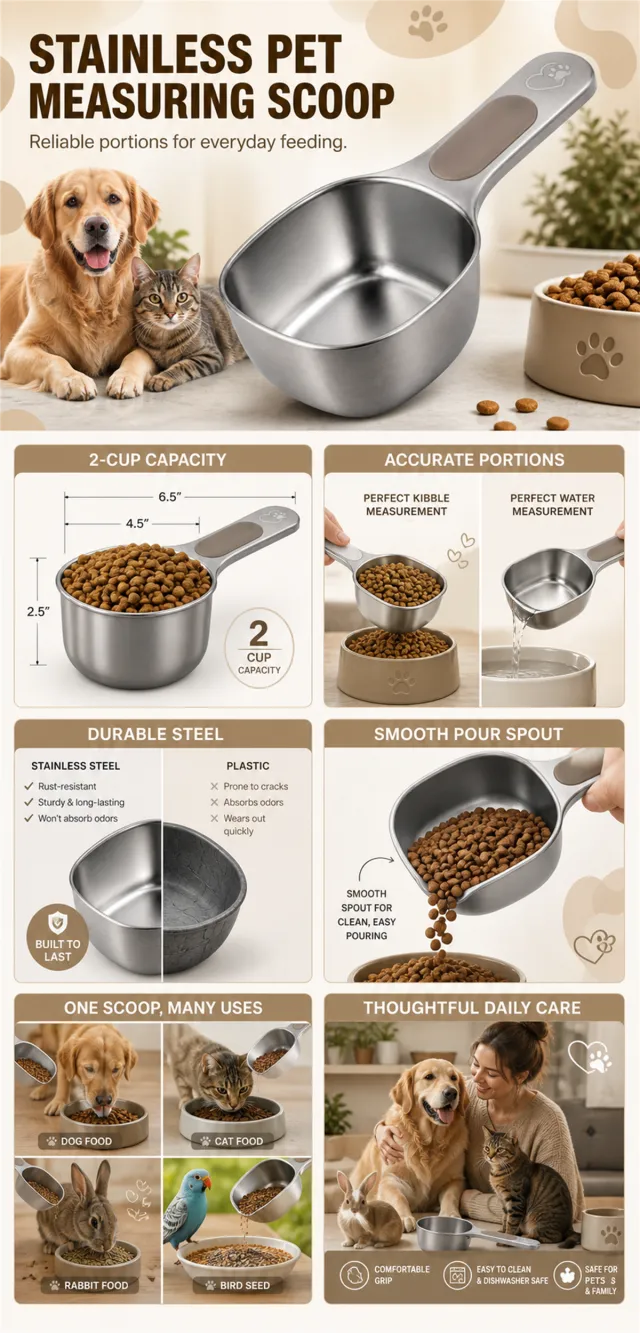
【Execution Routing | Do Not Display】 If the image-generation tool can be invoked multiple times: concatenate the sharing rules with A–F separately, execute six times, generating one 1000×1000 square image each time; do not submit all modules at once. If only one image can be generated per invocation: set the aspect ratio to 2:3 portrait mode in the interface or via API, and avoid using Auto; a recommended size is 1200×1800. Arrange the images into a 2-column × 3-row grid labeled A/B, C/D, and E/F, ensuring all six modules are equal in size and maintain a 1:1 proportion. If the platform enforces a 1:1 ratio, switch to an Agent-based approach or generate each module individually. 【Sharing Rules】 The provided product reference image serves as the sole basis for the product. Product: stainless pet measuring scoop. Copywriting must be in English, with brand placeholders replaced by MOCKUP only. Visuals should follow high-end commercial e-commerce photography standards—sharp imagery, clear hierarchy, and concise, easy-to-read copy. The product’s appearance, structure, color, quantity, accessories, and relative proportions must match the reference image; products, people, icons, and props should maintain natural proportions. All essential information must remain within the safe zone, with the background extending fully across all four edges. External white borders, vertical borders on left and right, transparent fill-in borders, watermarks, contact details, social media accounts, platform information, original branding, gibberish, irrelevant content, or unverified claims regarding efficacy or specifications are prohibited. Headlines must not be displayed. A–F must not appear. 【A | Theme】Copy: “STAINLESS PET MEASURING SCOOP”; “Reliable portions for everyday feeding.” Use the full product main visual to clearly convey core value. 【B | Theme】Copy: “2-CUP CAPACITY.” Design an independent square image around this theme, avoiding overlapping selling points, compositions, or product angles with other modules. 【C | Theme】Copy: “ACCURATE PORTIONS.” Design an independent square image around this theme, avoiding overlapping selling points, compositions, or product angles with other modules. 【D | Theme】Copy: “DURABLE STEEL.” Design an independent square image around this theme, avoiding overlapping selling points, compositions, or product angles with other modules. 【E | Theme】Copy: “SMOOTH POUR SPOUT.” Design an independent square image around this theme, avoiding overlapping selling points, compositions, or product angles with other modules. 【F | Theme】Copy: “ONE SCOOP, MANY USES”; “THOUGHTFUL DAILY CARE.” Design an independent square image around these themes, avoiding overlapping selling points, compositions, or product angles with other modules.
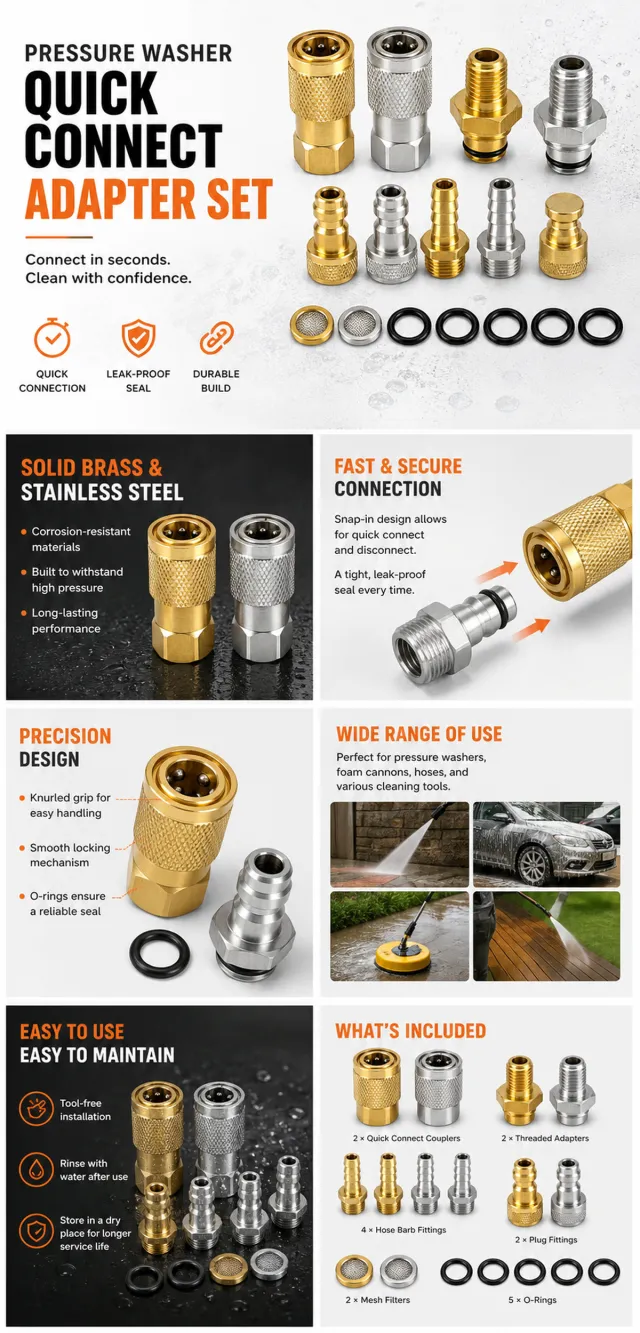
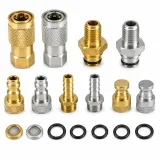
【Execution Route | Do Not Display】 If the image-generation tool can be invoked multiple times: concatenate the sharing rules with A–F separately, execute six times, generating only one 1000×1000 square image each time. If only a single image can be generated at a time: first set the interface/API to a 2:3 portrait orientation (do not use Auto), then arrange A/B, C/D, and E/F into a 2-column × 3-row grid; ensure all six cells are equal in size and maintain a visual aspect ratio of 1:1. The outer canvas must not be 1:1. 【Sharing Rules】 The provided product reference image serves as the sole basis for the product. The product is a pressure-washer quick-connect adapter set. Strictly adhere to the reference image’s shape, structure, color, quantity, accessories, texture, and relative proportions; do not fabricate unseen components, specifications, or functionalities. Use high-quality Amazon commercial photography and clear English infographics, with colors derived from the product itself, realistic lighting, and a clean layout. Maintain natural proportions for the product, figures, hands, icons, and props; stretching, flattening, or independently scaling is prohibited. Titles, products, and labels must remain fully within the safe zone, while the background extends across the entire frame on all four sides. Only use MOCKUP for branding. Avoid peripheral white borders, vertical edges on the left and right, transparent fill-in borders, watermarks, contact information, social media accounts, original brand logos, platform identifiers, garbled text, distorted body parts, or unverified copywriting. A–F are solely control markers and must not be displayed. 【A | Product Overview】Title: “PRODUCT OVERVIEW.” The hero composition should fully showcase the product along with the accessories included in the reference image, accompanied by three brief English icon-based selling points that highlight only visible or verifiable information. 【B | Materials & Design】Title: “MATERIAL & DESIGN.” Present materials, structure, surface finish, or styling through an overall view of the product combined with 2–3 close-up details; ensure clear labeling without inventing material names. 【C | Function in Focus】Title: “FUNCTION IN FOCUS.” Demonstrate key functions within realistic usage scenarios; maintain natural proportions among figures, hands, and the product, with authentic actions and easily understandable information. 【D | Details Up Close】Title: “DETAILS UP CLOSE.” Highlight 2–4 critical structural or operational areas using magnified details and short labels; do not alter the product’s structure. 【E | Everyday Use】Title: “MADE FOR REAL LIFE.” Depict usage, carrying, storage, or maintenance scenarios consistent with the product; retain only one clear theme and avoid duplication with C. 【F | Packaging Contents】Title: “WHAT’S INCLUDED.” Lay out or neatly arrange the actual products and accessories shown in the reference image, ensuring accurate quantities and relative sizes; if the list cannot be confirmed, instead display visible specifications, dimensional relationships, or usage steps, without fabricating numbers.
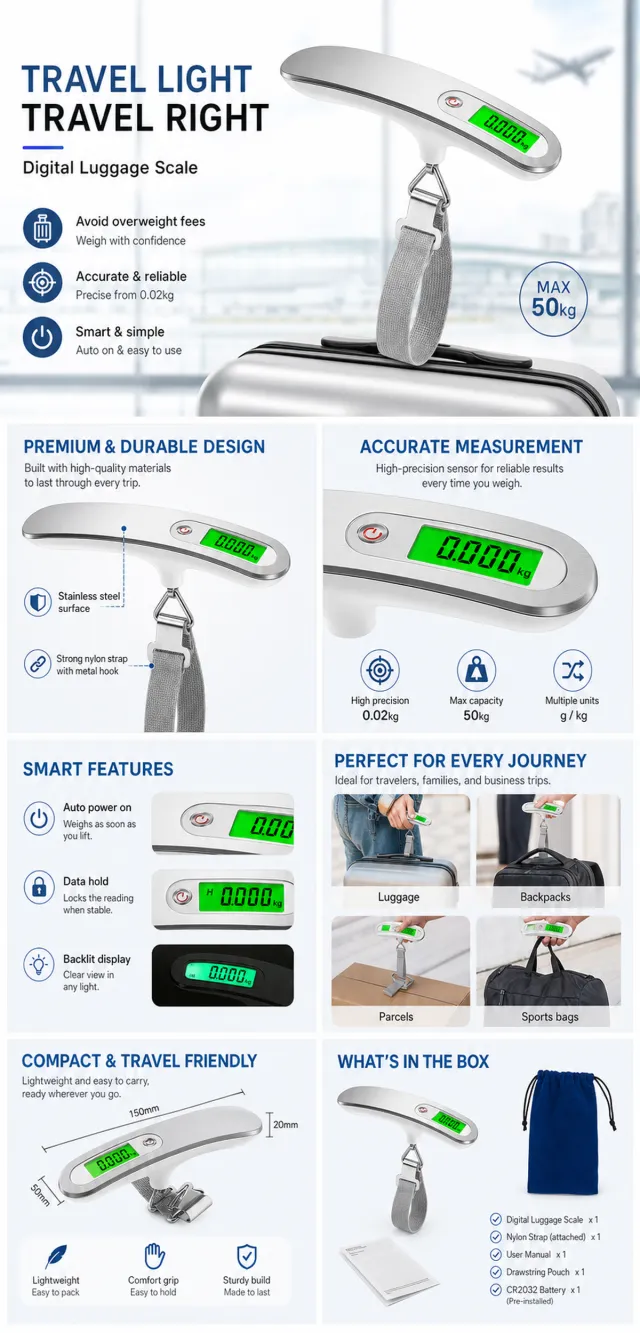
【Execution Route | Do Not Display】 If the image-generation tool can be invoked multiple times: concatenate the sharing rules with A–F separately, execute six times, generating only one 1000×1000 square image each time. If only a single image can be generated at a time: first set the interface/API to a 2:3 portrait orientation (do not use Auto), then arrange A/B, C/D, and E/F into a 2-column × 3-row grid; ensure all six cells are equal in size and maintain a visual aspect ratio of 1:1. The outer canvas must not be 1:1. 【Sharing Rules】 The provided product reference image serves as the sole basis for the product. The product is a digital luggage scale. Strictly adhere to the reference image’s shape, structure, color, quantity, accessories, texture, and relative proportions; do not fabricate any unseen components, specifications, or functionalities. Use high-quality Amazon commercial photography and clear English infographics, with colors derived from the product itself, realistic lighting, and a clean layout. Maintain natural proportions among the product, figures, hands, icons, and props; stretching, flattening, or independently scaling is prohibited. Titles, products, and labels must remain fully within the safe zone, while the background extends across the entire frame to all four edges. Only MOCKUP may be used for branding. Avoid peripheral white borders, vertical sidebars, transparent fill‑ins, watermarks, contact information, social media accounts, original brand logos, platform identifiers, garbled text, distorted body parts, or unverified copywriting. A–F are solely control markers and must not be displayed. 【A | Product Overview】Title: “PRODUCT OVERVIEW.” The hero composition should fully showcase the product along with the accessories depicted in the reference image, accompanied by three brief English icon‑based selling points that highlight only visible or verifiable information. 【B | Materials & Design】Title: “MATERIAL & DESIGN.” Present materials, structure, surface finishes, or styling through an overall view of the product combined with 2–3 close-up details; ensure clear annotations without inventing material names. 【C | Function in Focus】Title: “FUNCTION IN FOCUS.” Demonstrate key functions within realistic usage scenarios; maintain natural proportions among people, hands, and the product, with authentic gestures and easily understandable information. 【D | Details Up Close】Title: “DETAILS UP CLOSE.” Highlight 2–4 critical structural or operational areas using magnified details and short captions; do not alter the product’s structure. 【E | Everyday Use】Title: “MADE FOR REAL LIFE.” Showcase appropriate usage, carrying, storage, or maintenance scenarios that align with the product; retain only one clear theme and avoid duplication with C. 【F | Packaging Contents】Title: “WHAT’S INCLUDED.” Lay out or neatly arrange the actual products and accessories shown in the reference image, ensuring accurate quantities and relative sizes; if the contents cannot be confirmed, instead display visible specifications, dimensional relationships, or usage steps without fabricating numbers.

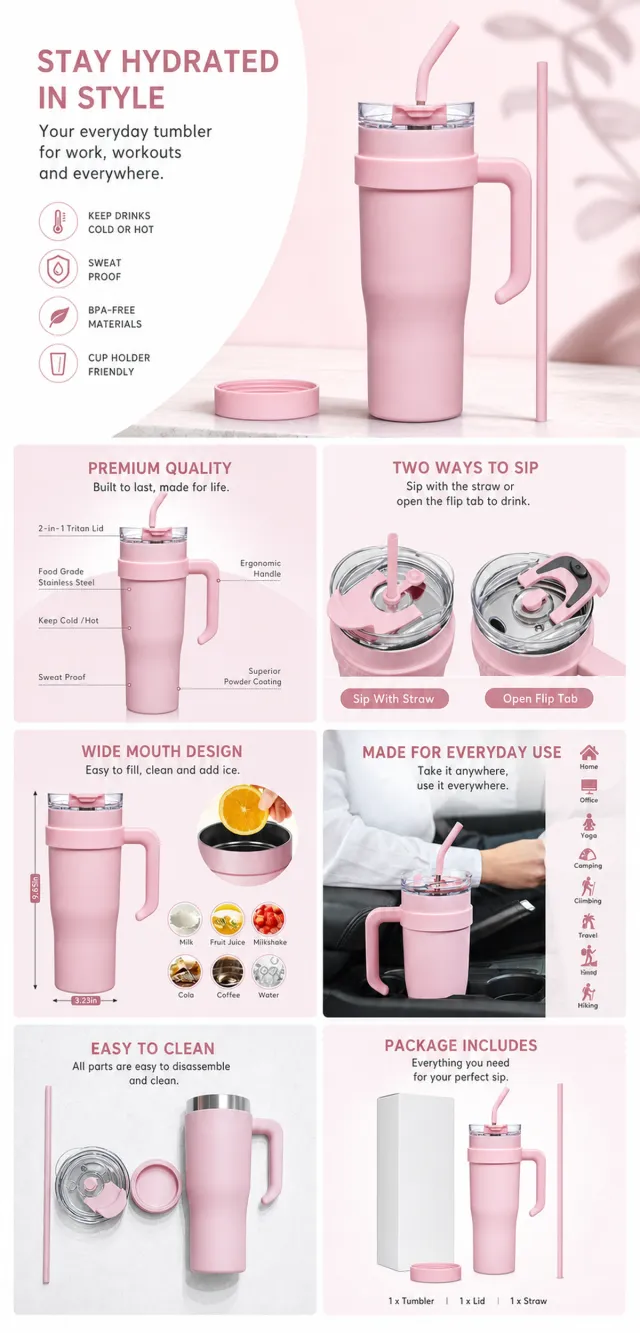
【Execution Route | Do Not Display】 If the image-generation tool can be invoked multiple times: concatenate the sharing rules with A–F separately, execute six times, generating only one 1000×1000 square image each time. If only a single image can be generated at a time: first set the interface/API to a 2:3 portrait orientation (do not use Auto), then arrange A/B, C/D, and E/F into a 2-column × 3-row grid; ensure all six cells are equal in size and maintain a visual aspect ratio of 1:1. The outer canvas must not be 1:1. 【Sharing Rules】 The provided product reference image serves as the sole basis for the product. The product is a pink-handled tumbler. Strictly adhere to the reference image’s shape, structure, color, quantity, accessories, texture, and relative proportions; do not fabricate any unseen components, specifications, or functions. Use high-quality Amazon commercial photography and clear English infographics; color schemes should match the product, lighting must be realistic, and layout kept simple. Maintain natural proportions among the product, figures, hands, icons, and props—no stretching, flattening, or independent scaling is allowed. Titles, products, and labels must remain fully within the safe zone, while the background extends seamlessly across all four edges. Only MOCKUP may be used for branding. No external white borders, vertical sidebars, transparent fill‑ins, watermarks, contact information, social media accounts, original brand logos, platform identifiers, garbled text, distorted body parts, or unverified copywriting are permitted. A–F are solely control markers and must not be displayed. 【A | Product Overview】Title: “PRODUCT OVERVIEW.” The hero composition fully showcases the product along with the accessories featured in the reference image; include three brief English icon‑based selling points, stating only information that is visible or verifiable. 【B | Materials & Design】Title: “MATERIAL & DESIGN.” Present materials, structure, surface finish, or styling through an overall view of the product combined with 2–3 close-up details; ensure clear labeling without inventing material names. 【C | Function in Focus】Title: “FUNCTION IN FOCUS.” Demonstrate key functions within realistic usage scenarios; maintain natural proportions among people, hands, and the product, with actions appearing genuine and information instantly understandable. 【D | Details Up Close】Title: “DETAILS UP CLOSE.” Highlight 2–4 critical structural or operational areas using magnified details and short captions; do not alter the product’s structure. 【E | Everyday Use】Title: “MADE FOR REAL LIFE.” Depict usage, carrying, storage, or maintenance scenarios consistent with the product; retain only one clear theme, avoiding overlap with C. 【F | Packaging Contents】Title: “WHAT’S INCLUDED.” Lay out or neatly arrange the actual products and accessories shown in the reference image, ensuring accurate quantities and relative sizes; if the contents cannot be confirmed, instead display visible specifications, dimensional relationships, or step-by-step instructions, refraining from fabricating numbers.

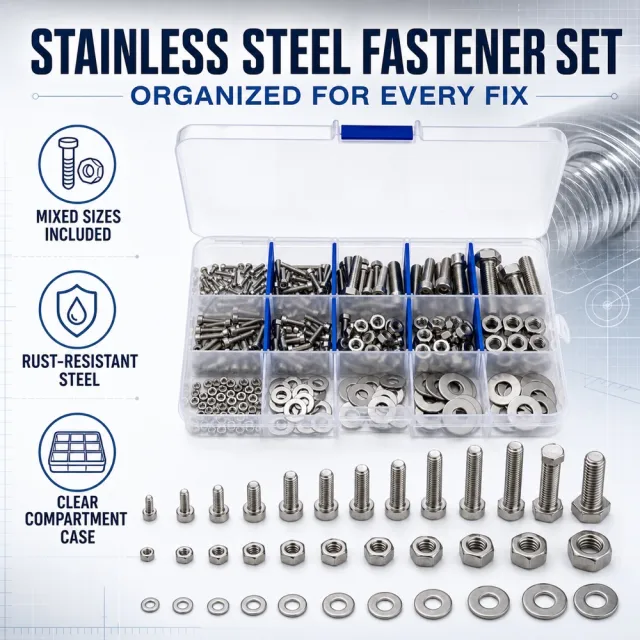
Asset type: Amazon secondary product benefit image, 1:1 aspect ratio. Create a polished product-benefit infographic from `1196_product.png`. Preserve the exact supplied product and its set components, and retain its original visual language, palette and flexible editorial layout. Information-volume cap: render exactly 1 main title, 1 core benefit and 3 feature components. Add no other generated copy, badge, slogan, price or promotion. Text (verbatim): ``` STAINLESS STEEL FASTENER SET ORGANIZED FOR EVERY FIX MIXED SIZES INCLUDED RUST-RESISTANT STEEL CLEAR COMPARTMENT CASE ``` Avoid: altered or extra products, watermark, typoed, overlapping or clipped text, prices and promotions.

【Execution Route | Must Not Appear on Screen】 If the image-generation tool can be invoked multiple times: concatenate the sharing rules with A–F separately and execute six times; each time, generate only one independent 1000×1000 square image, resulting in six sub-images. If only single‑shot generation is allowed: use a 2:3 vertical canvas measuring 1200×2500, with the top approximately 30% reserved for the product’s main visual integrated into the background, and arrange A/B, C/D, and E/F in two columns by three rows to form a six‑grid layout. All six cards should be equal in size, with visual proportions close to 1:1. Do not use a 1:1 outer canvas, nor full‑width cards, cross‑column cards, merged cards, borders, frames, or white margins. 【Sharing Rules】 The provided product reference image serves as the sole basis for the product’s appearance, structure, color, quantity, accessories, and relative proportions. Product orientation: olive‑green insulated water bottle, black lid, handle, and strap; suitable for commuting and outdoor use, with sealing and insulation capabilities. The product itself, along with any newly generated characters, animals, props, or text, must maintain natural proportions; stretching, flattening, or non‑uniform scaling is prohibited. The background should extend fully across all four edges. Branding must uniformly use MOCKUP; remove original branding, logos, watermarks, contact information, social media accounts, platform details, gibberish, and irrelevant content. Copywriting should be concise, clear, and credible, retaining the language of the reference image and refraining from adding unverified absolute claims or medical promises. A–F are merely control markers and must not appear on screen. 【A | Core Selling Point】 Highlight the product’s most important value and its complete main subject; keep the title short and clear. 【B | Structure and Materials】 Showcase key structural elements, materials, or components using close‑up shots or simple annotations, adhering to the product’s intended direction. 【C | Real‑World Use】 Generate natural scenes featuring people, animals, or everyday settings to demonstrate realistic usage, ensuring proportions and actions are believable. 【D | Details and Steps】 Use close‑ups, step‑by‑step instructions, or flowcharts to explain operations, textures, interfaces, storage solutions, or maintenance details. 【E | Lifestyle】 Illustrate how the product naturally integrates into family life, commuting, outdoor activities, travel, or work scenarios. 【F | Sets and Carrying】 Accurately depict the product, its accessories, quantities, and storage relationships; do not add any components absent from the reference image.