Wan3.0 officially launches its public beta: supports 30-second video and document input, and is the first in the industry to integrate PixPix.
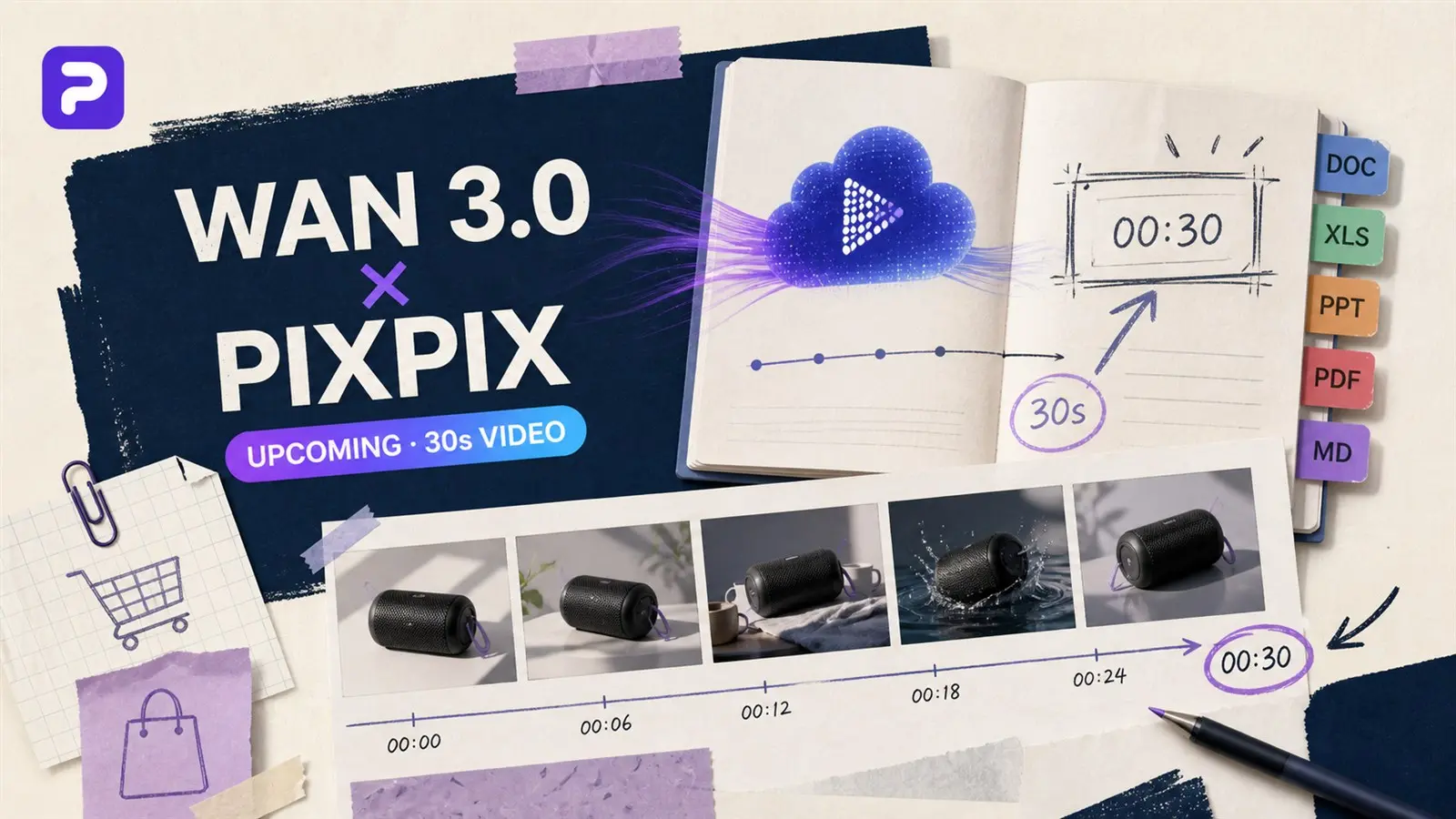
AI video generation has just received another major upgrade.
On August 6, Alibaba Cloud announced the official public beta launch of its next-generation video-generation model, Wan3.0. Compared to previous versions, this upgrade goes beyond simply improving image quality—it focuses on solving several very practical challenges in AI video creation: short video lengths, difficulty unifying multiple types of media, limited reference information, and the tendency for consecutive shots to “turn people into objects” or vice versa.
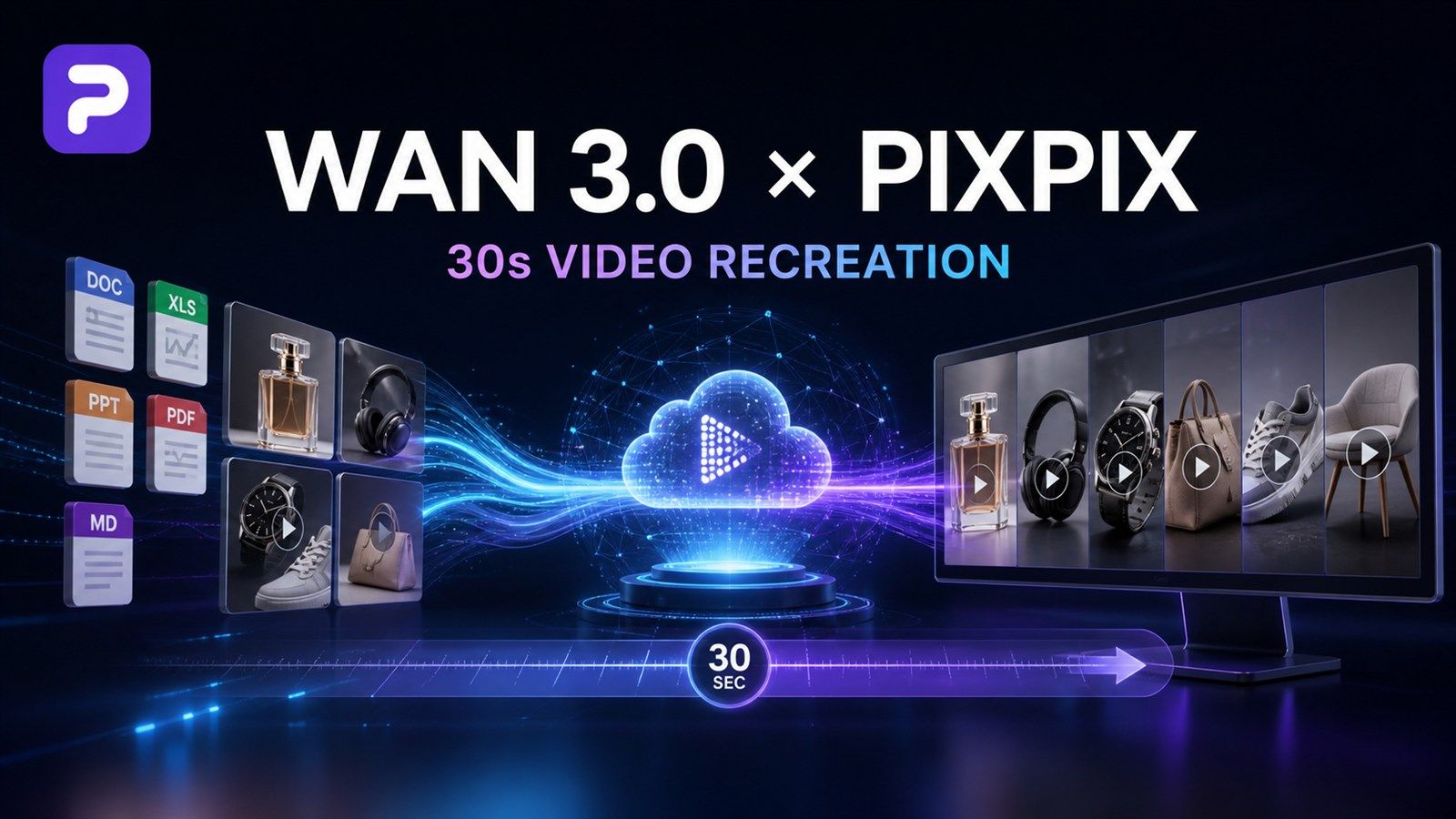
The most notable improvement is that Wan3.0 can now generate videos up to 30 seconds long in a single run. At the same time, it has significantly expanded the range of input materials—beyond text, images, audio, and video, it now supports documents such as .doc, .xls, .ppt, .pdf, and .md directly as creative inputs.
For e‑commerce sellers, advertising and marketing teams, and short‑video creators, this means AI video technology is evolving from generating brief, few‑second clips toward producing fully-fledged videos suitable for actual content production.
Following the public beta launch of Wan3.0, PixPix (https://www.pixpix.com/)will also be the first in the industry to integrate with Wan3.0. Going forward, users will no longer need to switch back and forth between multiple model platforms; they can use PixPix to generate AI‑powered images and videos, edit supplementary materials, and create e‑commerce content—all in one place.
What is the biggest change in this latest Wan3.0 upgrade?
First and foremost is the ability to generate 30‑second-long videos.
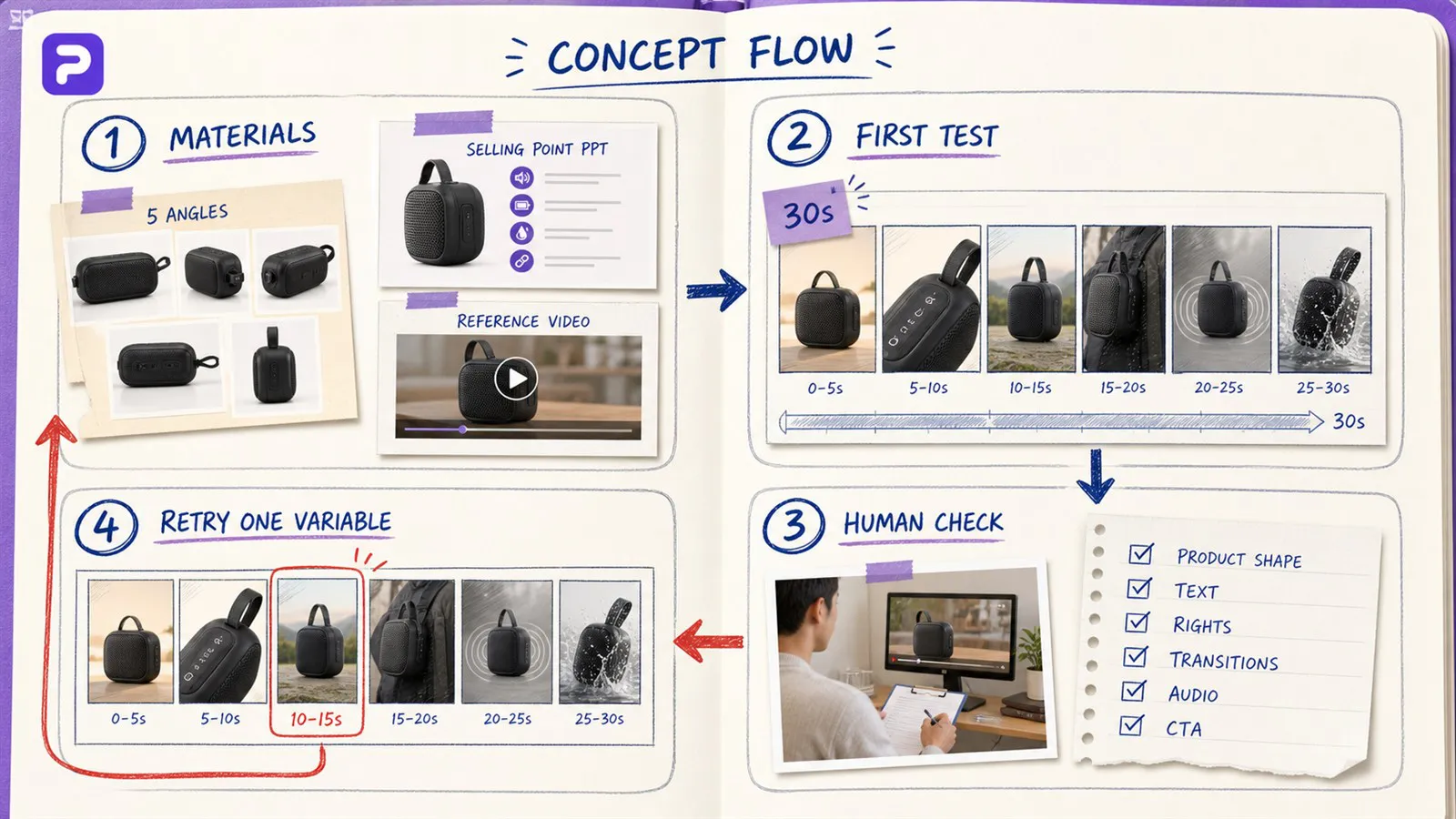
In the past, many AI video models were best suited for creating standalone clips lasting around 5 or 10 seconds. To produce a relatively complete product ad or narrative video, users often had to generate multiple segments and then reassemble them using editing software. Wan3.0 extends the maximum single‑generation length to 30 seconds, while supporting continuous camera movements and extended storytelling, thus providing much more room for coherent narratives.
Another noteworthy capability is direct video generation from documents.
In addition to common media types like text, images, audio, and video, Wan3.0 can also read PPTs, PDFs, Word files, Excel spreadsheets, and Markdown documents. For example, by uploading a product presentation PPT, product specifications, or a marketing plan and pairing it with appropriate prompts, users can further generate product demos, promotional shorts, and other content.
For businesses and e‑commerce teams, this approach is far more practical than simply “writing prompts to generate videos”—much existing material doesn’t need to be reorganized into complex prompts and can instead directly contribute to video creation.
Another significant upgrade concerns consistency.
When working with multiple reference materials, Wan3.0 places particular emphasis on maintaining stability across different shots—for elements such as characters, props, settings, color tones, and logos—while also enhancing the realism of facial expressions, body movements, and overall visuals.
This is especially important for product videos: while generating an attractive video may not be difficult, the real challenge lies in ensuring that the product’s appearance, packaging, characters, and scenes remain consistent throughout consecutive shots.
PixPix becomes the first in the industry to integrate with Wan3.0
Following the release of Wan3.0, PixPix was the first in the industry to integrate with this model.
Rather than offering just a standalone video‑generation interface, PixPix aims to address the entire visual‑content production workflow.
Currently, PixPix positions itself as an all‑in‑one AI agent for e‑commerce graphics and video, covering capabilities such as AI‑powered images, AI‑generated videos, product image sets, A+ detail pages, viral‑style replication, product retouching, clothing image collections, video remakes, and even infinite canvas features. According to its official website, the platform currently integrates numerous mainstream models, including GPT Image 2.0, Nano Banana Pro, Seedream, Seedance, Kling, Veo, the Wan series, Hailuo, Runway, and others.
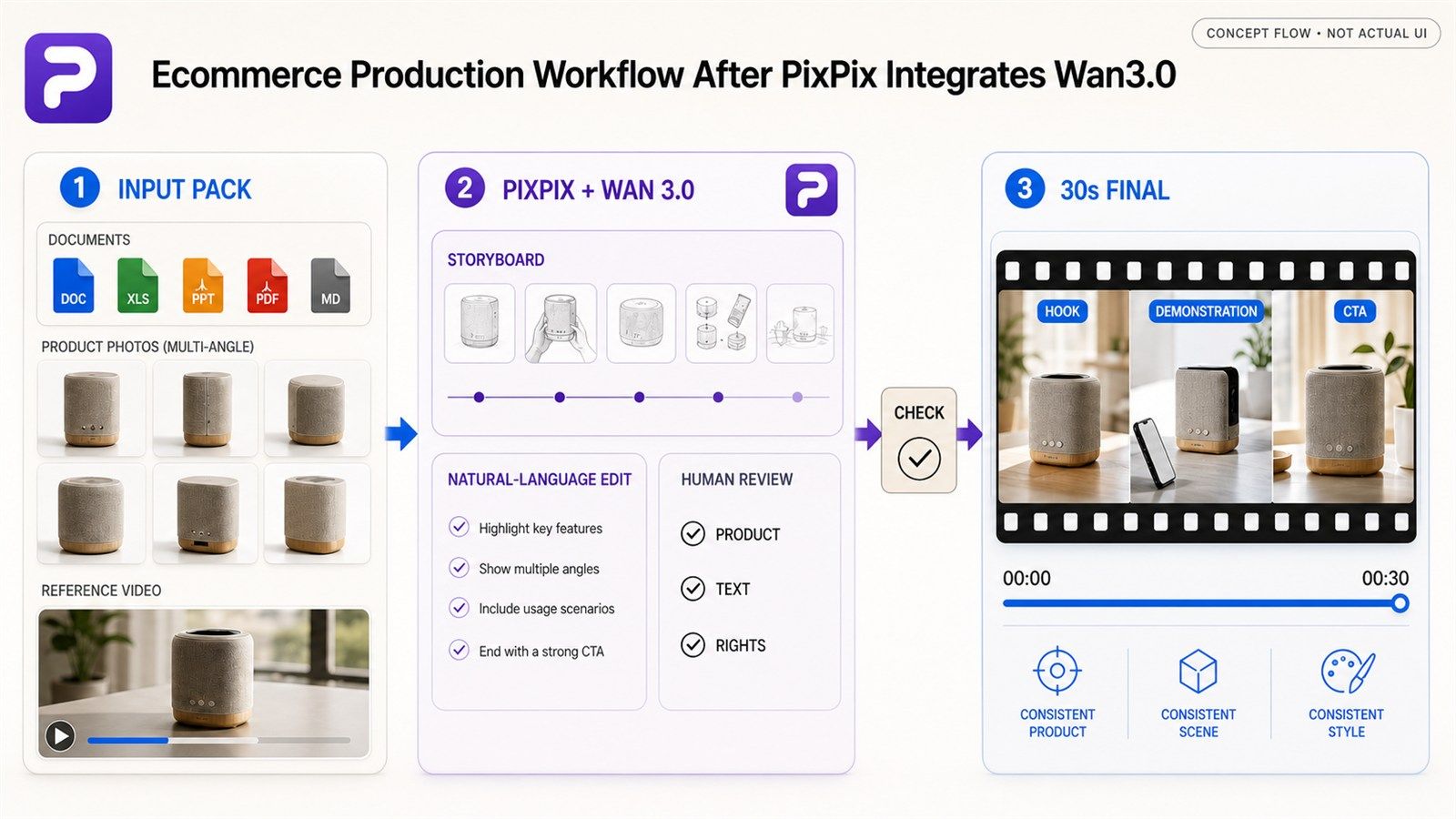
This also means that once Wan3.0 is integrated into PixPix, it won’t function as an isolated video‑generation tool, but will continue to play a role within the broader e‑commerce content workflow.
For instance, a cross‑border seller who only has a single original product photo can first use PixPix to generate white‑background images, scene shots, highlight images, model photos, and A+ detail pages. Then, based on these visual assets, they can proceed to create product videos, social‑media ads, or other marketing content.
Currently, PixPix’s product image‑set feature allows users to derive multiple visual variations from a single product photo while striving to maintain stylistic consistency across the entire set; meanwhile, A+ detail pages can further transform product specifications and key selling points into modular visual components.
If the original image itself requires additional processing, users can directly perform localized retouching, image expansion, background removal, high‑resolution enlargement, or product refinement—without having to repeatedly upload and download materials across different websites.
For e-commerce teams, 30 seconds is just the beginning
As evidenced by this latest upgrade of Wan3.0, the competitive focus in AI video models is shifting.
In the past, the main competition revolved around “who can generate more realistic videos.” Now, the emphasis is increasingly on whether videos can be longer, whether multiple source materials remain consistent, whether existing data can be directly utilized, and whether the generated content can still be further edited and integrated into actual workflows.
This is precisely where PixPix’s early integration with Wan3.0 adds significant value.
For ordinary creators, this provides direct access to the latest video-generation capabilities; for e-commerce sellers and marketing teams, it allows them to handle AI image generation, product retouching, detail-page creation, video production, and subsequent editing—all within a single platform—thereby reducing time costs associated with switching between tools.
Currently, the PixPix workbench offers promotional discounts of up to 54%. For specific details on discounts and promotion periods, please refer to the information displayed on the page at any given time. To experience PixPix’s existing AI image, AI video, and e-commerce visual features, you can visit the workbench directly; after Wan3.0 integration, you’ll also be able to enjoy these capabilities firsthand on PixPix.
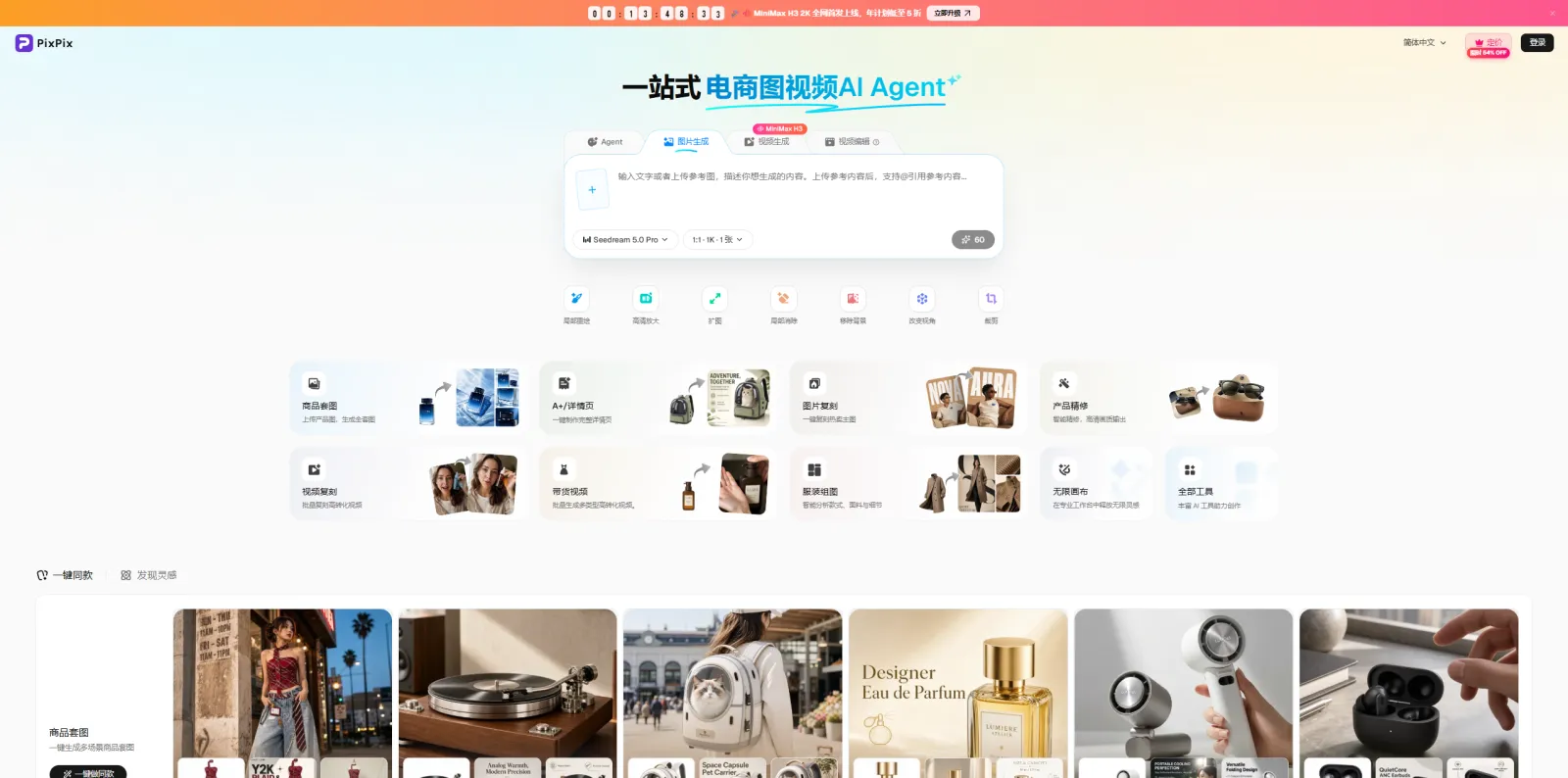
Visit the PixPix workbench to explore promotions and the latest features: https://www.pixpix.com

AI Image Tool Built for E-commerce Teams
For new product launches, advertising, and promotional campaigns, use AI to generate product images, scene visuals, ad creatives, and short video assets — making content production faster.